العربة
0
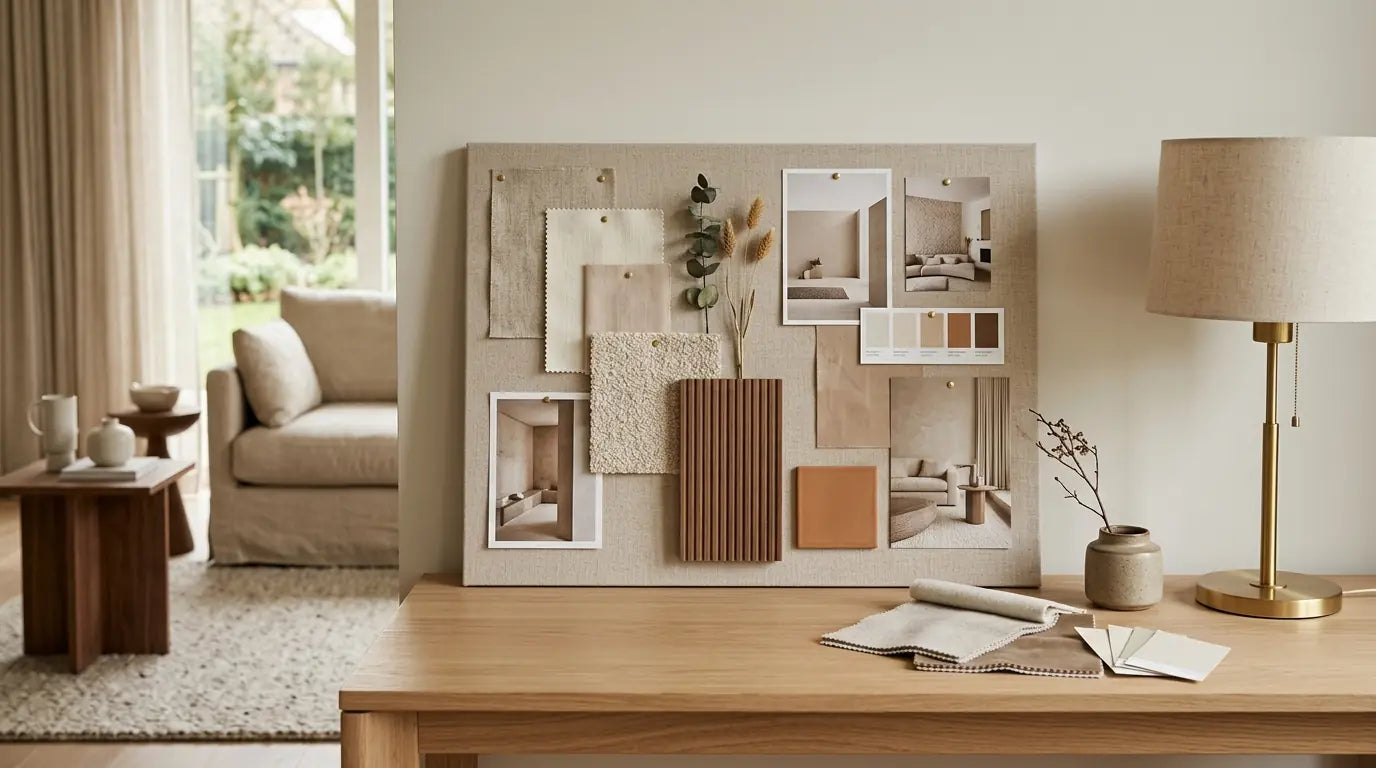
Minimalism has an image problem. Done badly, it looks like a showroom. White walls, hard edges, nothing to touch, nothing to feel. The room is empty, but it is not calm. It is just cold. Warm minimalism solves this without abandoning the goal. You keep the restraint. You keep the clarity. You just stop choosing materials and colors that make a clean room feel clinical instead of comforting. The fix is not adding more. It is choosing differently.

Shop Solid Wood Floating Wall Shelf with Natural Irregular Edge
Shop Quilted Linen Bay Window Cushion Mattress for Living Room
The Pain of Cold Minimalism
Most "minimalist" rooms fail for the same handful of reasons. The showroom look: Every surface is bare and every material is hard. Glass, glossy white lacquer, polished metal. Nothing absorbs sound or light. The room looks staged, not lived in.
The single-tone trap: White walls, white furniture, white floors. Without contrast or warmth, the eye has nothing to settle on. It reads as sterile, not serene.
No texture to touch: A room with no texture asks nothing of your hands and gives nothing back. Linen, raw wood, and hand-thrown ceramic invite touch. Smooth laminate does not.
Empty without intention: Negative space is only calming when it is chosen. Empty space that exists because nothing was bought yet just feels unfinished.

Shop Solid Wood Branch Wall Hook - Rustic Natural Design for Clothes & Accessories
One Rule Only: Warm the Material, Not the Color Palette
The instinct is to fix a cold room by adding color. That usually backfires, because it adds visual noise to a room that was supposed to feel quiet. The actual fix is warming the materials, not the palette. Keep your neutral colors. Change what they are made of. A white wall stays calm. A white lacquer console does not feel the same as a white oak console, even in the same shade. Wood holds warmth that lacquer cannot fake. The same is true for linen instead of polyester, for hand-glazed ceramic instead of machine-finished resin, for raw brass instead of chrome.

Shop Japanese Paper Table Lamp | Mid Century Bedside Lamp
Shop Linen Bay Window Cushion Floor Mattress
Before / After: One Corner, Two Feelings
Picture a reading corner before the edit. A glass-top side table. A smooth white floor lamp. A bare wall. The chair itself is upholstered in a flat synthetic weave. Nothing here is wrong, exactly. It is just cold. The corner photographs well and feels like nobody sits in it.
Now the same corner, after a material edit, not an addition. The glass table is swapped for one in pale solid wood. The lamp shade becomes handmade paper instead of painted metal, so the light itself turns soft and uneven instead of flat. A single woven basket sits at the base of the chair, holding a throw in raw linen. Nothing new was added to the room's footprint. The corner did not get busier. It got warmer.

Shop Quilted Linen Bay Window Cushion Mattress for Living Room
Shop Rustic Handmade Ceramic Bowl with Spiral Texture - Jingdezhen Pottery Dinnerware
Shop the Fix: The Warm Minimalist Layer
Each piece below does one job: bring warmth into a minimal room without adding clutter or color.
Quilted Linen Bay Window Cushion: Softens hard furniture lines, adds tactile warmth.
Hand-Woven Sea Grass Storage Baskets: Grounds the room in something handmade and woven.
Rustic Handmade Ceramic Bowl: A small handmade anchor that reads as lived-in, not staged.
Void: Leave one surface or wall untouched on purpose.

Shop Quilted Linen Bay Window Cushion Mattress for Living Room
Shop Solid Wood Floating Wall Shelf with Natural Irregular Edge
Decision Branch: Tailoring the Warmth
Small spaces: Warm one or two materials well rather than spreading texture thin. A single linen throw and one wood surface can carry an entire room.
Open spaces: Repeat the same warm material across zones so the room reads as one idea, not several disconnected corners.
Cool-toned rooms (grey, white, concrete): Lean hardest on texture. Raw wood, linen, and handmade ceramic do the most work here because they contrast the coolness directly.
Already-warm rooms (beige, cream, natural light): You need less. One or two warm-material pieces will round out the room without tipping it into clutter.
FAQ
How do you make a minimalist room feel warmer without adding clutter?
Change materials, not quantity. Replace hard, glossy, or synthetic surfaces with wood, linen, or handmade ceramic in the same neutral colors you already have.
Why does my all-white room feel cold instead of calm?
Usually because every surface is smooth and hard. Color is not the problem. Texture is.
Is warm minimalism the same as boho or maximalism?
No. Warm minimalism keeps the same restraint as any minimalist room. It changes the material of what stays, not how much stays.
Discover More Curated Pieces
Bring warmth into a minimal room without losing the calm.
Ready to transform your space?
Explore our full collection of curated home decor and find the perfect pieces for your mood board.