العربة
0

What Are the 7 Basic Principles of Interior Design?


Shop Abstract Drip Glaze Ceramic Vases - Handmade Decorative Pottery for Home Decor
Shop Japanese Paper Table Lamp | Mid Century Bedside Lamp
What Are the 7 Basic Principles of Interior Design?
The 7 basic principles of interior design are the quiet framework behind rooms that feel finished, calm, and coherent. These principles—balance, emphasis, rhythm, proportion and scale, harmony, contrast, and details—act as a structure before style, helping you determine how objects lead, support, and relate to one another within a space.
The Seven Principles at a Glance
You can think of these seven principles as a checklist for any room, whether you are styling a living room, bedroom, dining area, console, shelf, or entry. The goal is to make a room readable rather than textbook-perfect.

Shop 72" Modern Column Floor Lamp - Beige Paper Shade & Brown Base
1. Balance
Balance is the feeling that visual weight is distributed in a way that makes the room stable. It does not always mean symmetry; it can be achieved through intentional arrangement where a heavier side is offset by a lighter one, ensuring the room does not feel as though it is leaning.

Shop Abstract Drip Glaze Ceramic Vases - Handmade Decorative Pottery for Home Decor
Shop Fabric Modular Sofa for Living Room
2. Emphasis
Emphasis is the focal point—that one thing the eye lands on first. Whether it is a fireplace, a piece of art, or a bold light fixture, emphasis allows the rest of the room to relax, giving the eye a clear lead while other elements act as supporting material.

Shop Blue & White Striped Ceramic Bowls & Plates Set
3. Rhythm
Rhythm is the repetition that moves the eye through the room. This can be achieved through repeated curves, colors, textures, or shapes. It is the underlying relationship between objects that creates a sense of connection and prevents the eye from stopping and starting abruptly.

Shop Abstract Drip Glaze Ceramic Vases - Handmade Decorative Pottery for Home Decor
Shop Clay Speckled Ceramic Vase for Flowers
4. Proportion and Scale
Proportion relates one object to another, while scale relates objects to the room and the human body. When a coffee table, rug, or piece of art feels 'off,' it is often due to an error in scale or proportion. Getting these right is essential for a room to feel anchored and finished.

Shop Brown Vase With a Brushed Stroke
5. Harmony
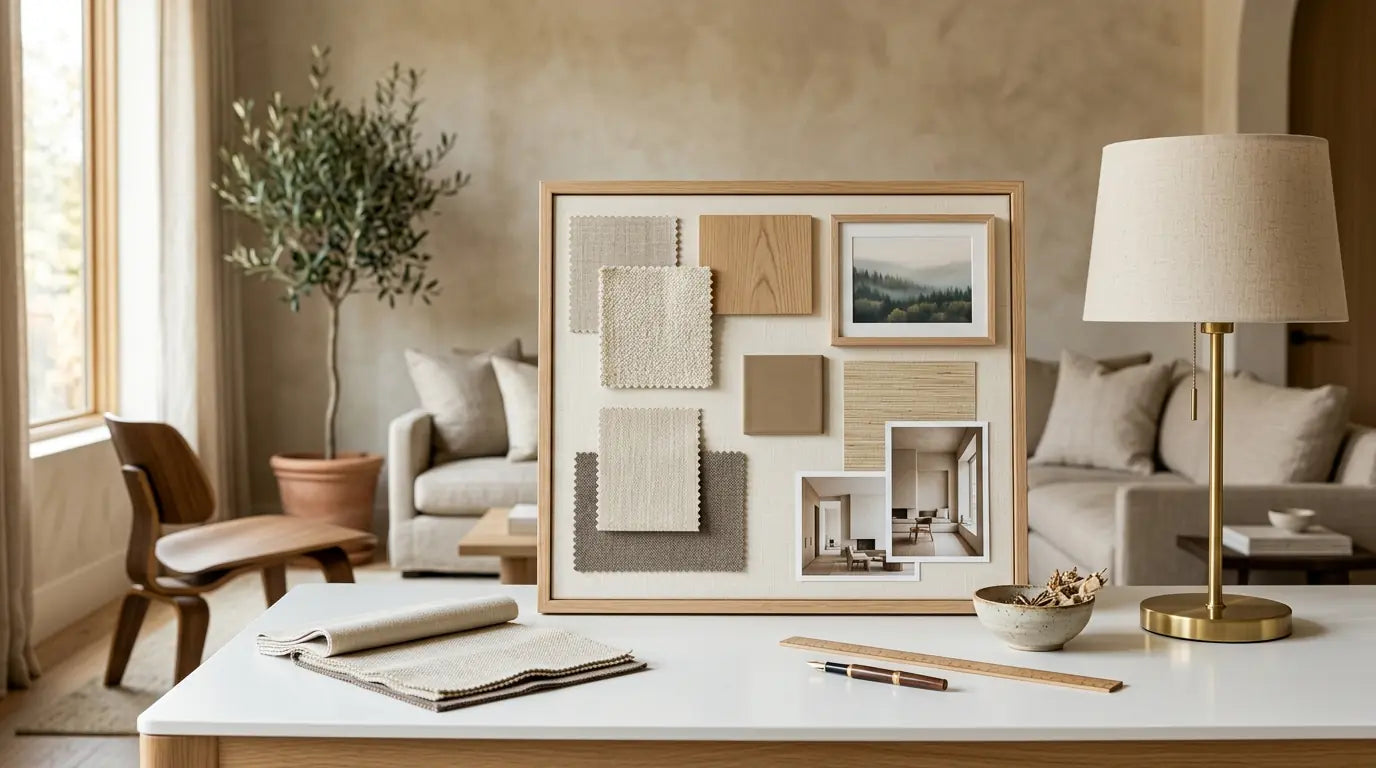
Harmony is the sense that all parts of a room belong to the same story. It is not about everything matching perfectly; rather, it is about colors, materials, and shapes 'speaking the same language.' Layering different textures like linen, wood, and ceramic within a unified palette creates a rich, cohesive feel.

Shop Black and White Checkered Ceramic Vase
Shop Ceramic Matt Plates Scandinavian Colors 8"/10" | Pink Ceramic Plate
6. Contrast
Contrast gives a room definition and prevents it from feeling shapeless. It can be created through dark against light, matte against glossy, or rough against smooth. A room with the right amount of contrast feels awake and legible, whereas one without it can feel sleepy or vague.

Shop Abstract Drip Glaze Ceramic Vases - Handmade Decorative Pottery for Home Decor
Shop Rustic Brown and Natural Handcarved Wide Oval Centerpiece Bowl
7. Details
Details are the finishing notes that reveal care, such as the trim on a curtain, the spacing of objects, or the quality of hardware. While often mistaken for pure decoration, these refinements are what elevate a room from merely furnished to fully resolved.
How The Seven Principles Work Together
The best rooms treat these principles as a sequence: balance creates stability, emphasis provides a center, rhythm adds movement, proportion ensures correctness, harmony provides coherence, contrast gives definition, and details provide the final finish. When a room feels 'off,' it is usually a structural failure of these principles, not the decor itself.
A Practical Way To Use The Principles
To style a room from scratch, start with the largest elements: the focal point, the main furniture, and the dominant material family. Build out by repeating shapes, adding contrast once the base feels calm, and finally editing the small details. If a space feels too busy, reduce the complexity rather than adding more decor.
Related Inner Union Reading
For further learning, explore concepts like the 70/30 rule, the 2/3 rule, the 3-5-7 rule, and techniques for layering a room without creating visual clutter.

Shop Folding portable paper lamp
Shop Danish-style Rough Earthenware Vases
The Inner Union Perspective
A successful room should feel readable, edited, and personal. The quiet power of these seven principles is that they provide a framework to decide what belongs and what should be removed, ultimately giving your space a clear, intentional voice.
Sources
Britannica: Concepts of design
Houzz: Rhythm and how it engages the eye
Britannica: Design relationships
Ready to transform your space?
Explore our full collection of curated home decor and find the perfect pieces for your mood board.