Cart
0


How to Build an Interior Design mood board (And Avoid Expensive Furniture Mistakes)
You just bought a beautiful linen sofa, a rug, a sleek coffee table... But when you put them in the same room, your heart sinks... They look awful together. This is the ultimate pain of the decorator. It's the 'Frankenstein room'—getting together pieces without looking at the big picture vision that connects them. It leaves you with expensive bills, endless returns, and a chaotic room stressing you out.
The solution is not more items, it's a mood board. A mood board acts like your north star. It establishes an aesthetic direction from the beginning, before you spend money. A set of pictures inform your decisions better than simple words. Your version of 'modern neutral' might mean stark white and black, but to your partner means beige and olive green. A mood board aligns your visions and prevents expensive mistakes before they happen.

The Difference Between a Pinterest board and a Mood Board
Before we build, we need a massive belief shift: A Pinterest board is not a mood board. We usually dump tons of images into a Pinterest board. If you try to design from there you will see 300 conflicting images, and end up paralyzed or making bad choices. A mood board is a highly edited and specific directional map. It doesn't tell you what to buy, instead it dictates how the room should feel.
Step 1: Gather Imagery (The Brain Dump)
Start broad with no filter. Save anything you like from social media or magazines. If any photo speaks to you, save it. Don't worry at this stage if the images match with each other. Save images you like, including conflicting images. At this stage, you're collecting data on your subconscious preferences.

Step 2: Look for Themes (The Detective Work)
Once you have a large collection of images, step back. You are looking for common denominators. Colors: Are you saving warm, muddy neutrals? High-contrast black and white? Earthy greens? Textures: Do you gravitate toward sleek marble and polished nickel, or do you keep saving images of rough-sawn wood, tumbled limestone, and nubby bouclé? Architectural Details: Are you drawn to clean, modern lines, or traditional reeded cabinetry and arches? These emerging themes are the best indicators of your true personal style. They are the elements you will not get tired of in six months.

Step 3: Edit (The Ruthless Cut)
This is the most important step. For this specific room you are designing, narrow down your pile of inspiration images to five to seven photos. Why five to seven? Because any more than that creates confusion. If you put seven images next to each other, they must work in harmony. If one feels too rustic while the others feel sleek, throw it out. If one relied on bright pops of color while the rest are neutral, throw it out. The surviving five to seven images are your aesthetic law. If a piece doesn't fit within the vibe, you should not buy it.

Step 4: Create Cohesion (The Final Mix)
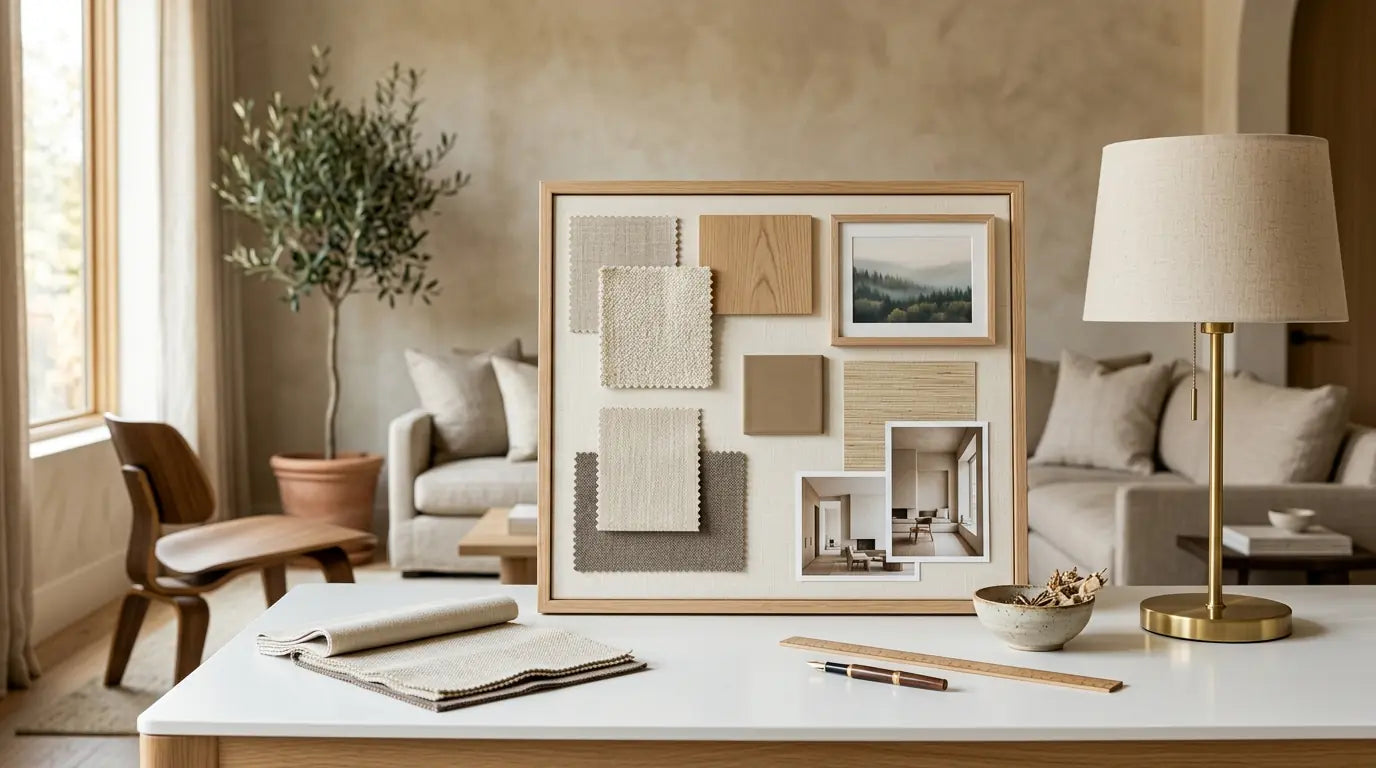
A successful mood board is not just five photos of living rooms side by side. To create a cohesive board, you need a mix of different elements. Make sure your final board includes:
One Wide Room Shot: This is your main inspiration. It shows the overall balance, scale, and lighting you are aiming for.
Detail Photos: Zoom in. Include a photo of a specific detail you love, like how a vintage chair sits next to a sleek modern table, or a close-up of a cabinet handle.
Color Swatches: Pull 3 to 5 core colors right from your images. Include your main wall color, a dark grounding tone, and a few accents.
Material Textures: Design is tactile. Add pictures of the 'hard' and 'soft' materials you want in the space. Think unlacquered brass, soapstone, and marble for hard materials, and washed linen, velvet, and worn leather for the soft ones.
Unexpected Inspiration: This is a designer secret. Add a picture that has nothing to do with furniture. A foggy mountain landscape, a macro shot of a dried leaf, or a cool street in Spain. This anchors the feeling and color palette of the room without boxing you into copying someone else's sofa.
Bringing the Mood Board to Life
Once your board is set, shopping becomes very easy. You no longer have to ask, 'Will this look good?' You ask, 'Does this match the board?' If your board is anchored in quiet, earthy tones and deep textures, you know exactly what to look for. You skip the glossy synthetic fabrics and go straight for the pieces that tell your specific story. Design is a process that unfolds one decision at a time. Trust the restrictions of your mood board, have courage in your vision, and watch your house transform into a home.