Cart
0
You may also like

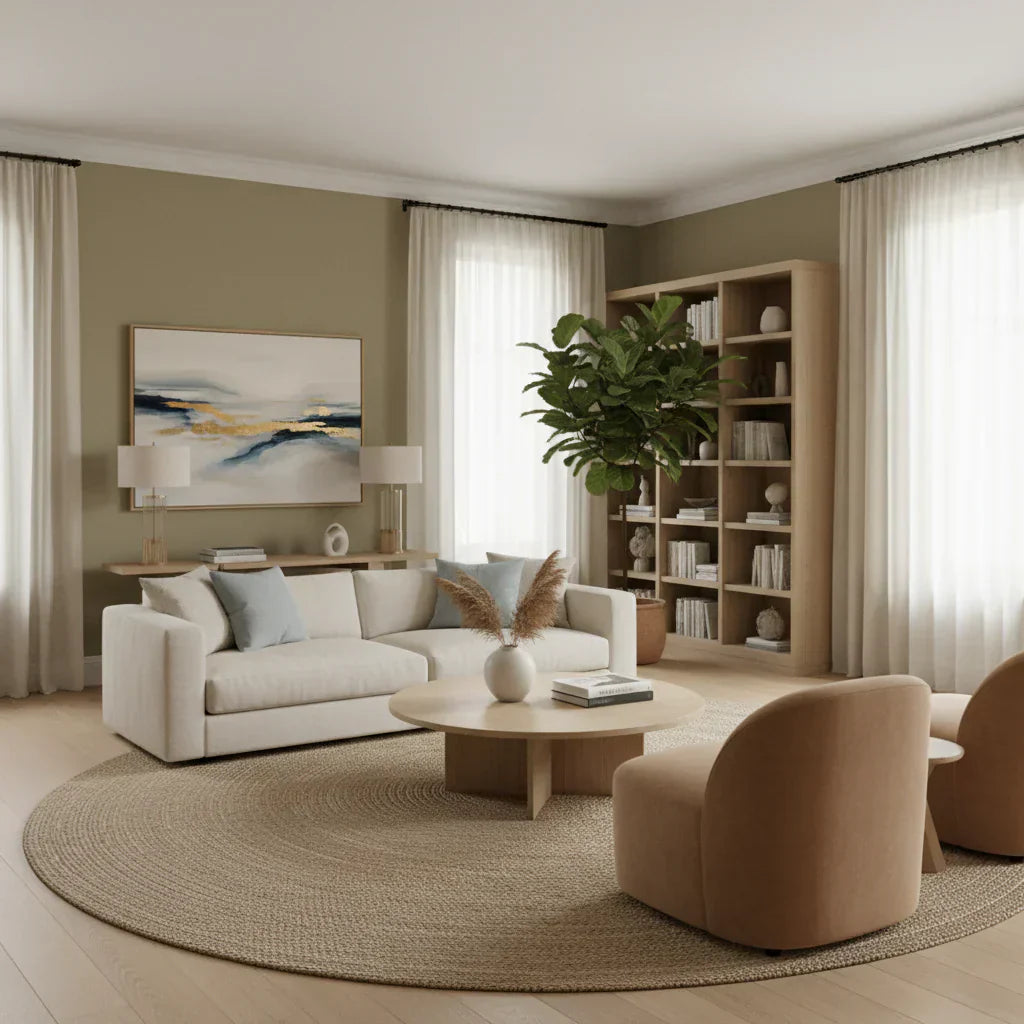
Rhythm and repetition in interior design are what make a room feel connected instead of random. They help the eye move comfortably through a space, link furniture and decor together, and make even simple rooms feel considered. When a room feels calm, cohesive, and visually clear, rhythm is usually doing more work than people realize.
This is not only about repeating the same object over and over. Good rhythm comes from a mix of repetition, contrast, alternation, transition, and gradation. These tools help you create visual movement without clutter and interest without noise.
Rhythm is the sense of visual flow that carries the eye from one part of the room to another. In practice, that can come from repeating a color, echoing a shape, using a material more than once, or letting one line lead naturally into the next. A paper lamp, a curved vase, and a rounded side table can create a subtle conversation even when they are not matched as a set.
In quieter interiors, rhythm matters even more because there are fewer loud elements competing for attention. The room has to feel resolved through proportion, texture, spacing, and repeated visual cues rather than bold color alone.
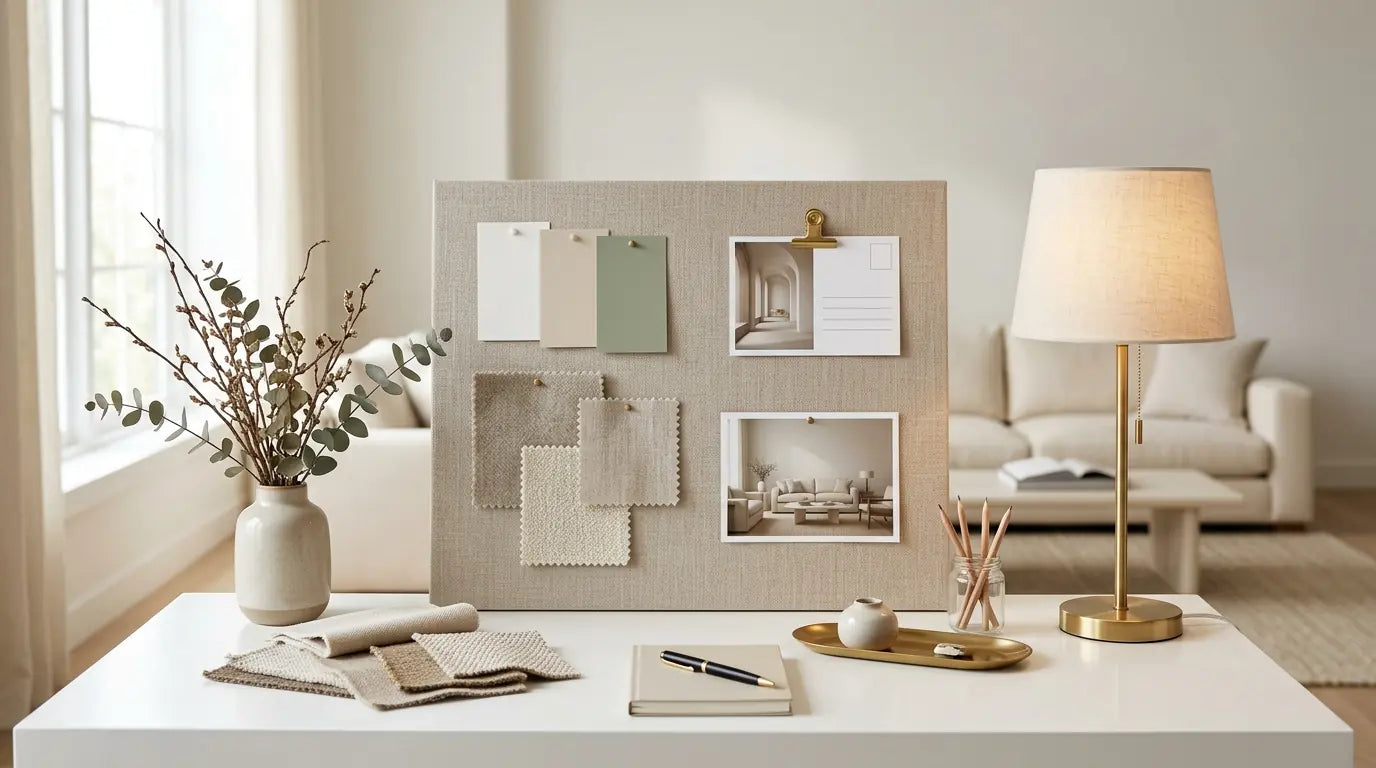
Repetition is the easiest entry point. If a room feels disconnected, repeat one visual idea three times. That might be a warm wood tone, a matte ceramic finish, a rounded silhouette, or a woven texture. Once the eye sees the same element reappear, the room starts to feel intentional.
One easy way to do this is through lighting and small objects. A paper lamp can echo the soft roundness of a ceramic vessel, while a carved wood stool can repeat the warmth of a frame or shelf. Those small repetitions make the room feel authored rather than assembled.
Shop table lamps and ceramic vases for pieces that can repeat shape and finish without forcing a full room makeover.
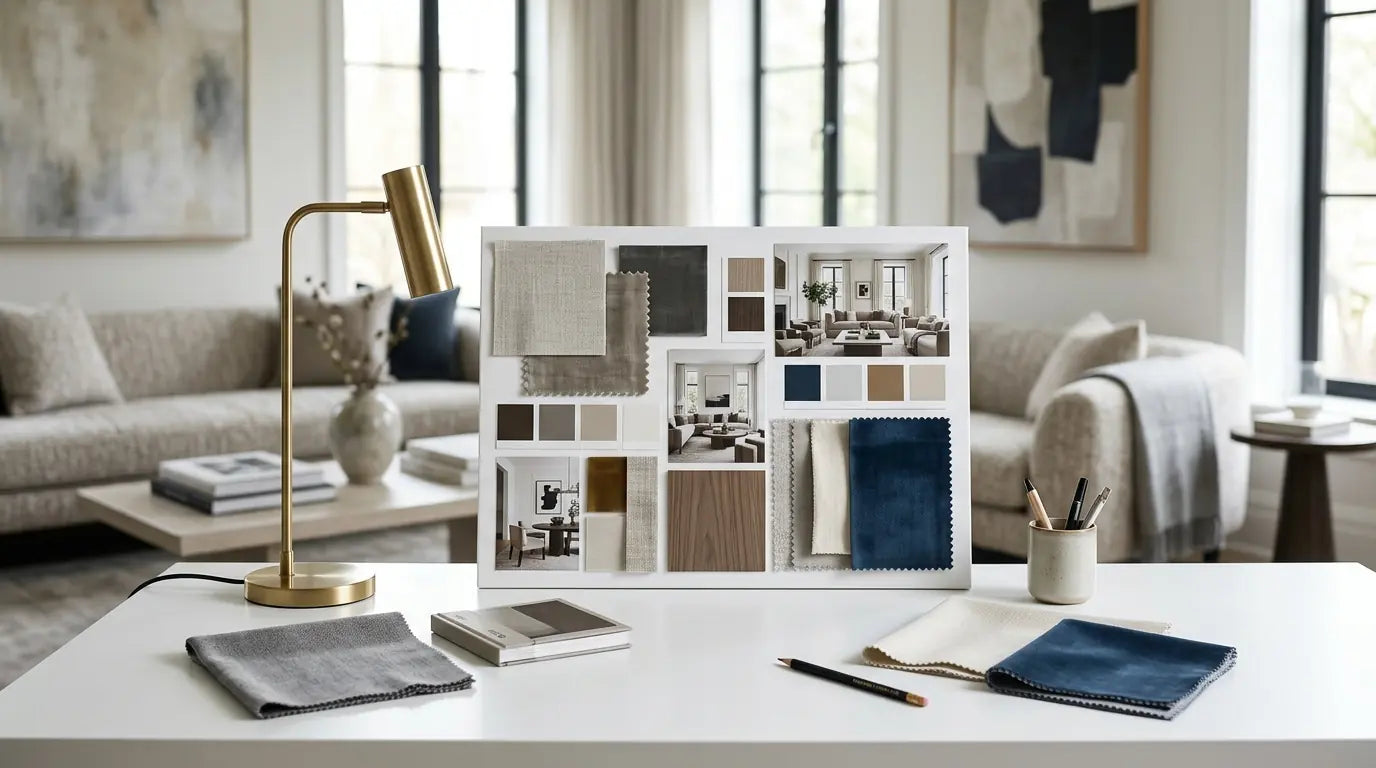
Repetition works best when it has a counterweight. If every repeated element is equally soft, equal in scale, and equal in texture, the room can feel sleepy. Contrast introduces tension in the right places. That can mean rough against smooth, tall against low, dark against pale, or crisp lines against more organic forms.
A room with repeated neutral tones becomes much more memorable when one darker wood piece grounds the palette or one sculptural lamp interrupts a field of soft upholstery. Contrast gives rhythm its clarity.
Alternation is what happens when the eye moves between two related ideas: dark and light, open and closed, smooth and textured, curved and straight. It is especially useful in shelves, gallery walls, dining setups, and layered seating arrangements. Transition is gentler. It happens when forms or tones shift gradually instead of abruptly.
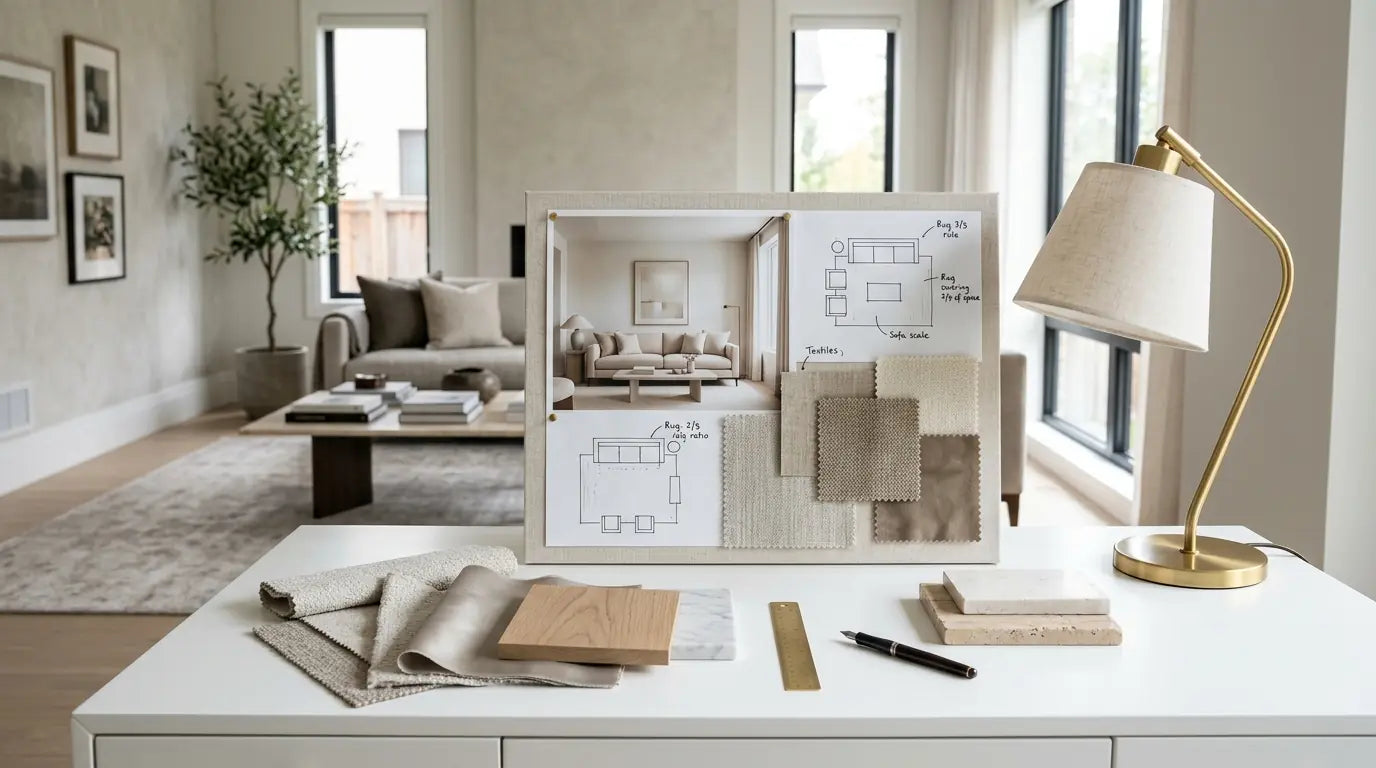
For example, a room can transition from a low upholstered sofa to a slightly taller side table, then to a taller floor lamp, then to vertical drapery. That height progression creates movement without making the room feel busy. The same principle works with materials, where woven fiber leads into raw wood, then into matte ceramic, then into linen.
Floor lamps are especially useful for creating vertical transition and balancing lower furniture arrangements.
Gradation is a more refined form of rhythm. It happens when something changes by degree: a sequence of tones from dark to light, a group of objects increasing in height, or textures becoming gradually softer across a room. This is one reason grouped decor can feel elegant when it is done well. There is a sequence to read, not just a pile of objects.
In real rooms, gradation often shows up through layered textiles, grouped vessels, or a sequence of lighting intensities from ambient to task to accent. It helps the room feel composed and complete.
In a living room, rhythm often comes from repeated curved forms: a rounded mirror, a circular side table, a drum shade, and a soft-edge vase. In a bedroom, it may come from repeated textile textures such as linen bedding, a woven rug, and a softly pleated shade. In a dining room, rhythm is often architectural: repeated chair silhouettes, pendant spacing, and a line of objects centered along the table.
The strongest examples usually do not rely on one dramatic statement. They layer several modest repetitions together so the room feels natural rather than staged.
The most common mistake is using isolated beautiful pieces that do not relate to one another. Another is repeating too literally, which can make a room feel stiff. A third is forgetting contrast, so the room stays calm but never becomes memorable. Rooms also lose rhythm when everything is styled at the same height or when surfaces are filled with objects that do not share any visual language.
If a space feels off, the fix is often editing and regrouping instead of buying more. Remove the pieces that are not reinforcing the main rhythm, then repeat the strongest material, shape, or tone in a few intentional places.
For an Inner Union Home look, rhythm usually comes from natural textures, warm woods, matte ceramics, woven fibers, and calm lighting. Start with one grounding material and one repeated silhouette. Then build the rest of the room around those signals. A ceramic vase can echo the curve of a table lamp. A woven basket can repeat the texture of a rug. A darker stool can add the contrast needed to anchor a neutral palette.
Browse lighting, rugs, and vases when you want to create rhythm through repeated materials rather than overly matched decor.
Rhythm is the visual movement that guides the eye through a room by repeating or varying color, shape, texture, line, or scale.
Repetition is one tool. Rhythm is the overall flow created by repetition, contrast, transition, alternation, and gradation working together.
Repeat one or two elements clearly, then add contrast in texture, scale, or tone so the room still feels alive.
The goal is not to make everything match. The goal is to help the room move well. When rhythm and repetition are working, the room feels calmer, more coherent, and more complete. That is why these principles matter so much in homes that aim for warmth, restraint, and quiet beauty.