Cart
0

How to Make a Room Feel Lighter Without Making It Feel Empty


Shop Brown Vase With a Brushed Stroke
Shop Elegant Linen Pillow Cases with Frills
How to Make a Room Feel Lighter Without Making It Feel Empty
Many people try to make a room feel lighter by stripping it back too fast. They remove the darker accents, clear the shelves, pull away the layered textures, and leave only the bare minimum. The room may feel less crowded, but it often starts to feel uncertain too. It loses depth before it gains ease. That is why making a room feel lighter is not the same as making it emptier. A light room still needs anchor, softness, rhythm, and enough material variation to feel finished. The goal is not to take the soul out of the room. The goal is to remove visual weight without removing presence.

Shop Black and white canvas ceiling lamp
Shop Danish-style Rough Earthenware Vases
What Makes a Room Feel Heavy
A room usually feels heavy because too many things are asking for attention at once. That can come from: dark accents repeated too often, dense surface styling, bulky furniture silhouettes, thick fabrics that absorb light, too many medium-strength objects with no hierarchy, or not enough open space between groupings. The room does not always need fewer things overall. It often needs fewer competing things in the same visual zone.
Lightness Is About Visual Pace, Not Just Color
People often assume that a lighter room just means a paler room. But lightness is also about pacing. It is about how quickly the eye can understand what matters. A room can be neutral and still feel dense if every surface is full. A room can be layered and still feel airy if the spacing is clear, the shapes are disciplined, and the materials catch light well. This is why lightness has as much to do with layout and proportion as it does with palette.
Start by Removing Visual Weight, Not Personality
The first edit should be weight, not character. Before taking away the interesting objects, look for what is visually overloading the room. That might be a heavy throw left out of season, one too many side objects on the console, a cluster of dark accessories repeating the same note, or an arrangement that is too low, too dense, and too evenly distributed. When you edit, keep the pieces that create shape or atmosphere. Remove the pieces that only add volume. This is usually how a room starts feeling lighter without turning generic.

Shop Abstract Drip Glaze Ceramic Vases - Handmade Decorative Pottery for Home Decor
Use Softer Contrast Instead of Hard Contrast
One reason rooms feel heavy is that the contrast is too abrupt. Black against cream, heavy espresso wood against pale upholstery, or too many sharp-edged silhouettes can make a room feel stricter than it needs to. Try replacing one hard dark note with: smoked or warm brown wood instead of black; aged bronze instead of stark matte black; clay, taupe, sand, or mushroom instead of high contrast white and black; or rounded shapes instead of too many hard angles.

Shop Danish-style Rough Earthenware Vases
Shop Paper Table Lamp Elongated
Let Textiles and Natural Materials Carry the Warmth
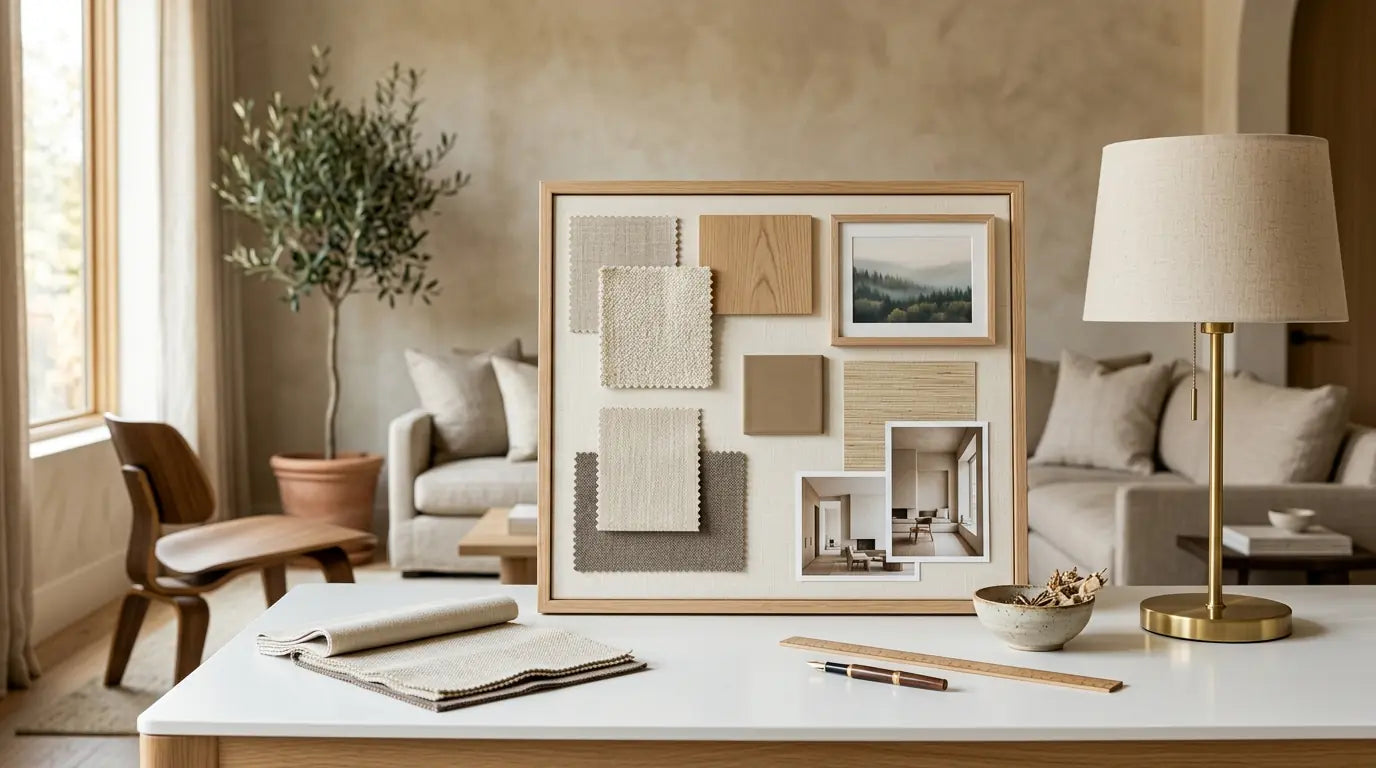
When people remove too much from a room, what usually disappears first is softness. Soft linen, washed cotton, wool, paper shades, pale wood, handmade ceramic, woven fiber, and matte finishes all help a room feel lighter while still feeling inhabited. These materials reflect light gently and keep the room grounded without making it look busy. The trick is to reduce heaviness while preserving touch.

Shop Abstract Drip Glaze Ceramic Vases - Handmade Decorative Pottery for Home Decor
Shop Bamboo Hand Woven Candle Holder
Open the Surfaces, Keep the Anchors
If you want a room to feel lighter fast, open the surfaces. Coffee tables, shelves, nightstands, and consoles often carry more decorative weight than they need to. One tray arrangement can be enough. One shelf cluster can be enough. One lamp and one vase can be enough on a console if the scale is right. The room starts to breathe when each surface has one readable idea instead of five. But keep the anchors: the lamp that gives height, the art that gives focus, or the rug that grounds the arrangement.
Choose Fewer Shapes and Repeat Them
Rooms feel calmer and lighter when their shapes repeat with some discipline. If every object has a different silhouette, the eye has to work harder. But if the room repeats a rounded bowl, a curved lamp, a soft-backed chair, or a quiet vertical line in a few places, the room starts to feel more coherent. Coherence creates calm, and calm often reads as lightness.

Shop Boho Aztec Mountain Wood Wall Art - Wood Wall Art, Decorative Green
Make One Area Generous
One of the fastest ways to make a room feel lighter is to leave one area more open than feels strictly necessary. That could be one side of the console, one section of the shelf, more visible floor around a chair, extra wall around one piece of art, or more open table surface around the main arrangement. That generosity gives the whole room more composure. It creates the feeling that the space has enough.
What to Avoid When You Want a Room to Feel Lighter
Avoid making these swaps: removing warmth instead of removing clutter; replacing every darker element with white; taking away all texture; reducing every surface to one tiny object; or keeping the same amount of decor but only making it paler. Those moves do not necessarily make a room feel lighter. They often make it feel flatter, colder, or less resolved.
The Inner Union Perspective
We think a room feels lighter when it feels more sure of itself. That usually means fewer repeated accents, more breathable spacing, softer contrast, and materials that hold light with ease. It does not mean turning the room into a blank page. If you want your space to feel lighter, edit what is visually loud and keep what is emotionally grounding. That is how a room stays calm, warm, and complete at the same time.
Sources
- Architectural Digest: interior design basics
- House & Garden: interior design rules
- Elle Decor: how to add texture to a room
Ready to transform your space?
Explore our full collection of curated home decor and find the perfect pieces for your mood board.