Cart
0
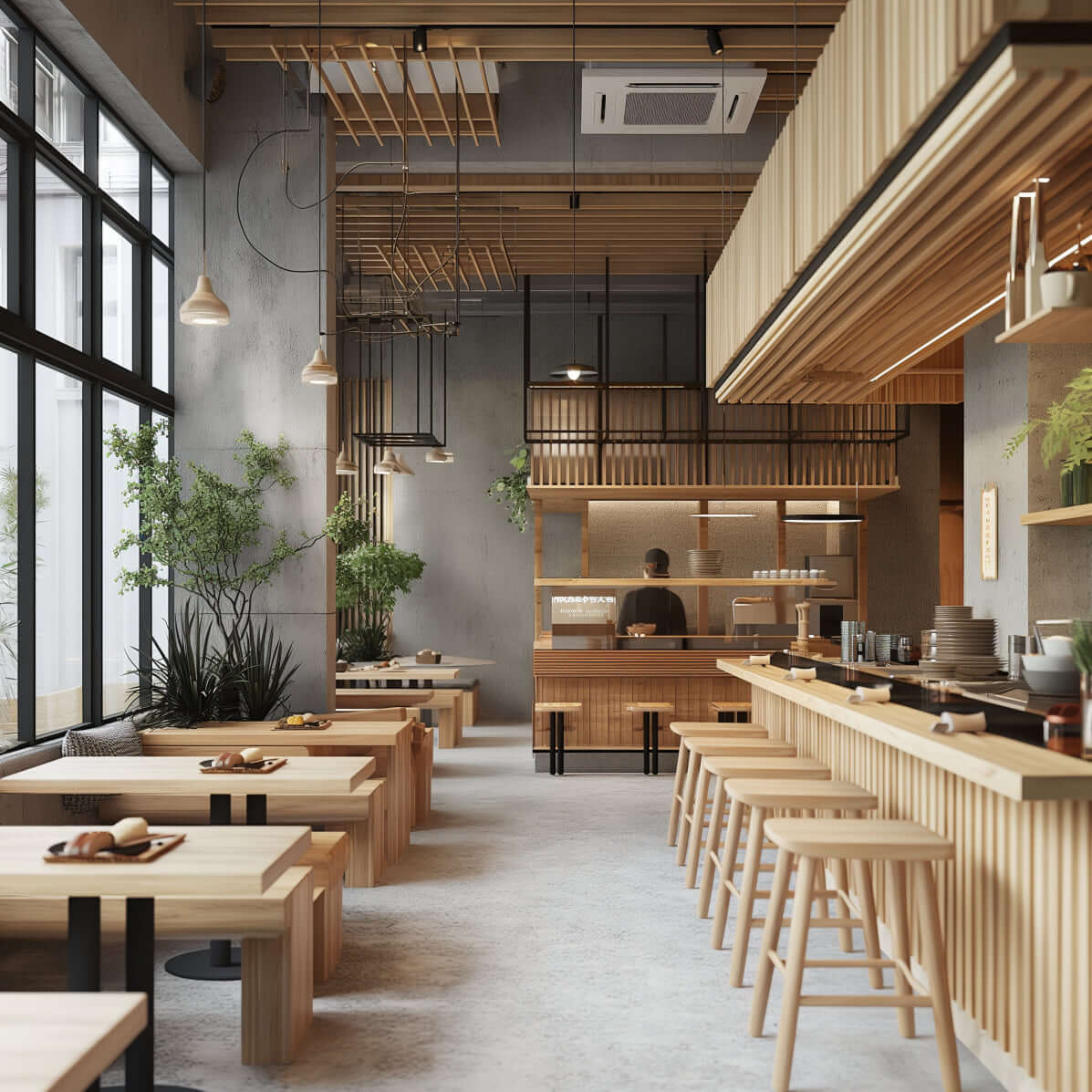
Japanese restaurant interior design is one of the most studied disciplines in the hospitality industry — and for good reason. A great Japanese or sushi restaurant interior does more than look beautiful: it creates the calm, purposeful atmosphere that makes the food taste better, keeps guests longer, and persuades them to return. It is a delicate balance of elegance, simplicity, and functionality, where every material, every shadow, and every object on the table works toward a single, memorable experience.
The best sushi rooms are not decorated so much as composed. They borrow the same restraint that defines the food itself: nothing extra, nothing loud, every element earning its place. A great interior should feel calm the moment a guest steps inside, draw the eye toward the counter where the chef works, and then quietly support the meal without ever competing with it. Below is a detailed breakdown of every aspect worth considering — from the concept you choose, to the palette and lighting that set the mood, to the artisan tableware that finishes the room and reaches the guest's hands.
1. Target Audience
Before a single material is chosen, the room has to know who it is for. The audience quietly dictates the concept, the price point, the lighting, the music, and even the pace of service. Get this right and every later decision becomes easier; get it wrong and an expensive fit-out can still feel like it belongs to the wrong restaurant.
- Who are your primary customers? Young professionals, families, tourists, or a specific niche of design-led diners?
- What ambiance do they prefer? Modern and minimal, traditional and formal, casual and fast, or upscale and ceremonial?
- What are their dining habits? Quick bites at a counter, leisurely multi-course meals, or special-occasion dining worth photographing and sharing?
Answer these honestly before you brief a designer. A sushi bar built for a lunchtime professional crowd — fast turnover, bright and efficient, counter-led — reads completely differently from an intimate omakase counter built for slow, reverent evenings of eight covers and a tasting menu. Both can be beautiful. Neither works if the interior is borrowed from the other. Let the audience set the brief, and let everything that follows serve it.
2. Concept and Theme
The concept is the spine of the design. Below are five proven directions for a sushi interior, each with the audience it speaks to, the materials that carry it, and the tableware that completes it.
Traditional Japanese

Traditional Japanese Sushi Restaurant Dining Room
Target audience: tourists seeking an immersive cultural experience, older diners nostalgic for authentic Japanese dining, and anyone drawn to traditional Japanese arts and craft.
- Ambiance: formal, elegant, and respectful of Japanese custom.
- Design elements: shoji screens, tatami mats, calligraphy scrolls, bonsai, and a small Japanese rock garden.
- Natural materials: dark wood, bamboo, stone, and paper lanterns.
- Color palette: rich, deep tones — black, red, gold, and natural wood.
Dining here is ceremonial. Expect set menus, multi-course meals, and a strong emphasis on presentation and etiquette — celebrations, business dinners, and intimate gatherings where the room itself signals occasion. Authentic Japanese cuisine prepared with meticulous, technique-driven care deserves a setting that matches its formality.
The tableware in a traditional room should feel inherited rather than bought. Hand-painted porcelain with scalloped edges and fine floral detail, deep underglaze blues, and the small irregularities of work made by hand all communicate authenticity in a way that mass-produced dishes never can. These are the pieces guests remember holding.
Shop the Look: Traditional Japanese Tableware
Hand-picked from the Inner Union collection.


Modern Minimalist

Minimalist Sushi Bar Counter with Elm Wood Stools
Target audience: design enthusiasts who appreciate clean lines, young professionals after a stylish room, and an international clientele drawn to restraint.
- Ambiance: sleek, sophisticated, minimal — open space and uninterrupted sightlines to the chef.
- Materials: concrete, glass, metal, and high-quality woods with smooth finishes.
- Palette: black, white, grey, and muted tone-on-tone, with the food as the only color.
The way people eat in these rooms is modern too: innovative dishes with artful plating, sharing plates that encourage social dining, and a register that runs from sophisticated tasting menus to high-quality casual. The food is the color and the event; the room simply frames it.
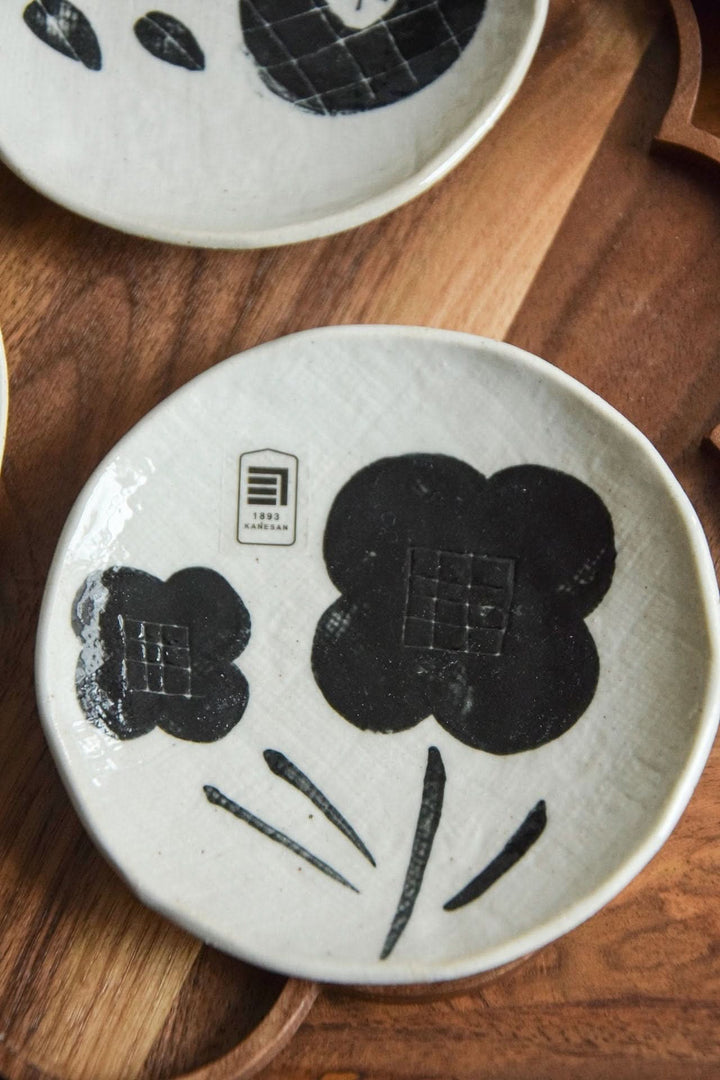
Minimalism is unforgiving — there is nowhere for a wrong note to hide — so the tableware does the heavy lifting. Speckled, matte, and texturally quiet pieces read as considered rather than decorative, adding warmth and tactility to a hard-edged room without breaking its discipline. A speckled beige plate or a matte white-stripe bowl gives the eye somewhere soft to land.
Shop the Look: Quiet Minimalist Tableware
Hand-picked from the Inner Union collection.


Fusion

Cozy Dining Booth with Warm Paper Table Lamp
Target audience: adventurous eaters chasing unexpected flavor, younger diners drawn to eclectic rooms, and anyone wanting a playful departure from tradition.
- Ambiance: eclectic, vibrant, and playful — Japanese elements mixed with industrial, bohemian, or tropical accents.
- Bold color and pattern: statement pieces, contrasting textures, and confident accent tones.
- Unique lighting: pendants, warm lamps, and pools of light that break the room into intimate zones.
Fusion kitchens blend Japanese ingredients and technique with flavors from other cultures, and they tend toward small plates and tapas-style dining that invite experimentation and sharing. The room should feel as exploratory as the menu — relaxed and playful, or refined and confident, depending on where you pitch it.
Fusion food rewards expressive plating, so choose dinnerware with motion and motif. Wave patterns, fish motifs, and deep underglaze blues hold their own against bold, cross-cultural dishes and become part of the storytelling on the table. In a fusion room, the plate is allowed to have a point of view.
Shop the Look: Expressive Fusion Tableware
Hand-picked from the Inner Union collection.


Wabi-Sabi

Minimalist Wooden Shelf with Rough Pottery Ceramic Vase
Target audience: diners seeking authenticity and mindful living — young professionals after a calm room, artists drawn to raw beauty, and a mature crowd that values imperfection. The whole concept rests on wabi-sabi, the Japanese aesthetic that finds beauty in the imperfect, impermanent, and incomplete — an idea that publications like Dezeen have increasingly credited as the foundation of the most considered interiors of the last decade.
- Ambiance: rustic, intimate, and welcoming of imperfection.
- Natural materials: reclaimed wood, exposed beams, and handcrafted ceramics.
- Earthy palette: muted greens, browns, greys, and indigo.
Wabi-sabi rooms are built for leisurely meals and mindful eating — small plates, shared slowly, with an emphasis on seasonal, locally sourced ingredients and the natural flavors that come with them. The pace of the room and the pace of the food should agree: unhurried, grounded, and warm.
Wabi-sabi is the most honest match for handmade pottery. Irregular rims, dynamic and unpredictable glazes, and the visible record of the maker's hand are not flaws here — they are the entire point. A spiral-textured bowl, a Mei Yan-style matcha bowl, or a rustic Fuji-san rice bowl each carries the quiet imperfection that makes a calm room feel genuinely alive rather than staged.
Shop the Look: Wabi-Sabi Pottery
Hand-picked from the Inner Union collection.


Japandi

Beautifully Set Table with Blue and White Japanese Ramen Bowl
Target audience: design-conscious diners who value function and simplicity — millennials after an Instagrammable room, urban minimalists, and an international audience drawn to the Scandinavian-Japanese blend.
- Ambiance: clean, modern, effortlessly chic — open plans, large windows, and natural light.
- Materials: light wood, concrete accents, and black metal finishes.
- Palette: white, grey, and beige with pops of muted color.
Japandi diners want quick, high-quality options that still feel designed — fast yet beautiful, with plating that photographs well and a room that does the same. Presentation matters as much as speed, and the fusion of Japanese technique with international flavor suits a crowd that eats with its phone as well as its chopsticks.
Japandi prizes pieces that are both genuinely useful and quietly beautiful. Botanical motifs, chestnut-leaf and kiku-flower patterns, and the soft, naturalistic glazes of heritage kilns like Mino ware and Arita ware — two of Japan's most celebrated ceramic traditions — bridge the Nordic love of pared-back simplicity with the depth of Japanese craft. Architectural Digest has cited Japandi tableware as one of the clearest expressions of the style: objects that are irreducibly functional yet feel like they belong in a museum case. Nothing is purely decorative; every piece on the table also works for a living.
Shop the Look: Japandi Tableware
Hand-picked from the Inner Union collection.


3. Color Palette and Lighting: Setting the Mood
Color and light decide how a room feels before anyone reads the menu. Treat them as a pair.

Warm Paper Lanterns Glowing Over a Sushi Counter at Night
3.1 Color Palette
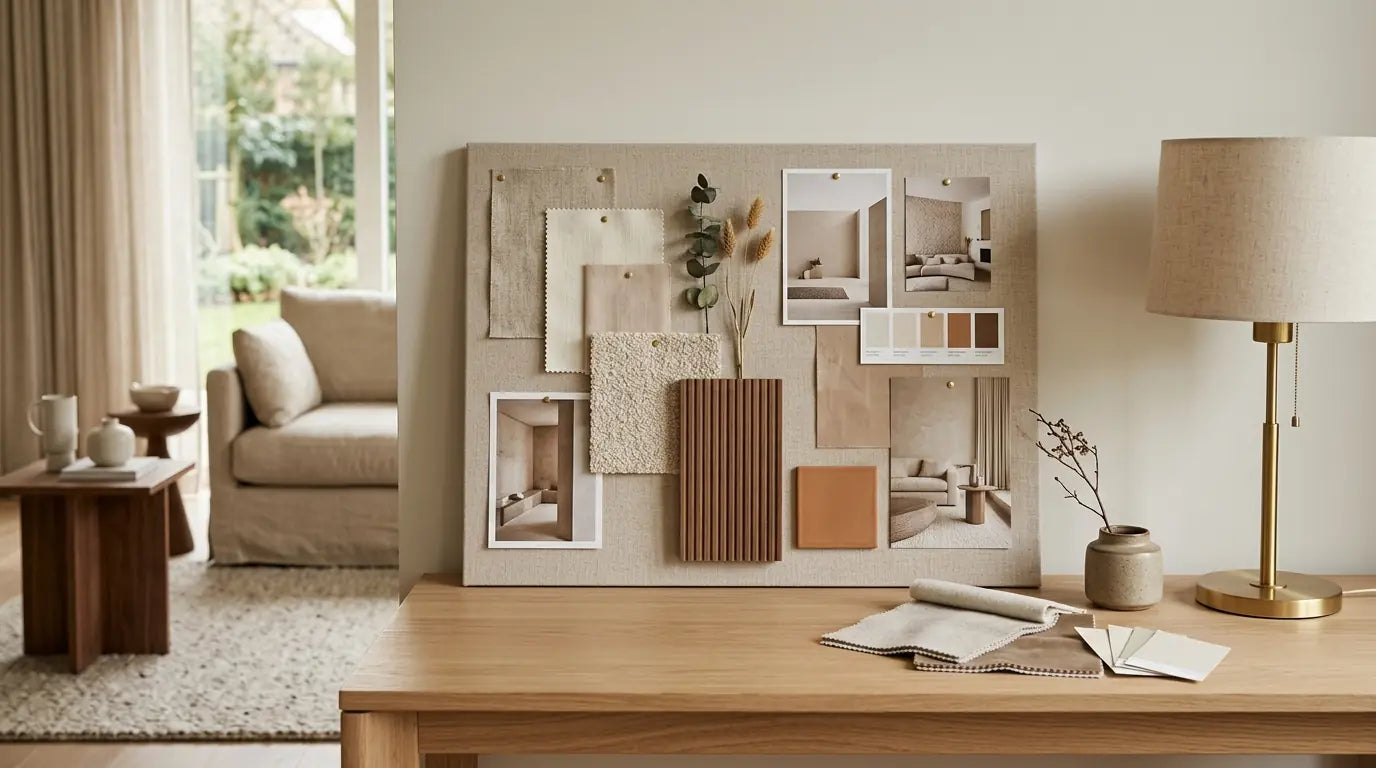
- Natural tones — earthy browns, beige, warm whites, soft greens. Calming and welcoming; ideal for traditional and wabi-sabi rooms. Carried in wood, bamboo, stone, linen, and cotton.
- Minimalist neutrals — black, grey, white, and subtle metallics. Sleek and modern; perfect for minimalist and fusion concepts. Carried in metal, glass, and polished concrete.
- Bold accents — measured hits of red, green, blue, or yellow used to highlight the bar, a single wall, or the tableware itself.
3.2 Lighting
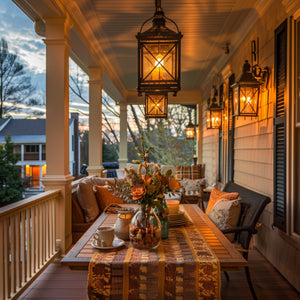
- Warm and natural — soft, diffused light that mimics daylight. Paper lanterns and warm-toned bulbs make the room intimate and flatter natural texture.
- Focus lighting — directional spots on the sushi counter to showcase the chef's hands, plus accent light on art and alcoves.
- Dimmable options — let staff move the room from bright and social at lunch to low and intimate at night.
Color and light are most powerful in combination. Natural tones with warm light create a calm, inviting room ideal for a traditional or wabi-sabi concept. Minimalist neutrals with focused, directional light produce a sleek, gallery-like modern space where the food and the chef are the only focal points. Bold accents with fully dimmable fixtures give a fusion room the flexibility to shift from bright and social at lunch to low and intimate by night. Plan the two together, never separately.
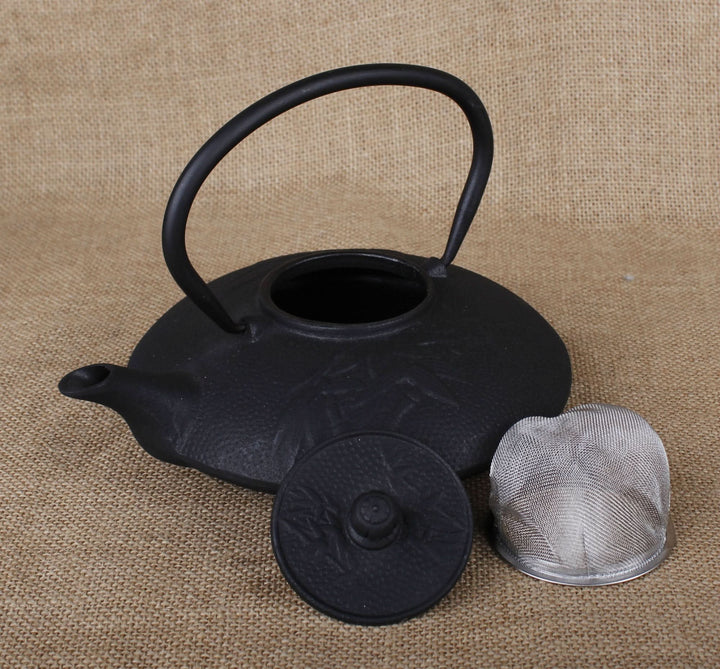
Echo that warmth on the table itself. Hand-glazed cups and tea ware catch low light beautifully — the slight unevenness of a hand-finished glaze turns a single warm bulb into a dozen small highlights, and a polka-dot Seto cup or a hand-painted mug brings personality to the quietest corner of the room.
Shop the Look: Warm-Toned Tea Ware
Hand-picked from the Inner Union collection.


A Note on Tableware: Where Interior Becomes Experience
Of every element in this guide, tableware is the one your guest actually touches. The walls, the lighting, and the furniture set the stage — but the bowl in someone's hands is where the design becomes personal. It is also the most affordable place to invest in real craft: a single set of artisan ceramics costs a fraction of a fit-out yet shapes every plate that leaves the pass.
Below are the pieces we would build a room around — premium, hand-finished, and equally at home in a restaurant or on your own table. Each one is restaurant-appropriate first and decorative second, which is exactly the right order.
Shop the Look: Curated Artisanal Tableware
Hand-picked from the Inner Union collection.
4. Materials and Textures
Texture is what guests feel without consciously noticing it — the grain under a hand on the counter, the give of a linen cushion, the cool of a stone surface. A sushi interior works best when it layers just a few honest materials and lets them age in full view. Patina is not damage here; it is proof that the room is real.
- Wood — bamboo, cherry, cedar, and oak for floors, counters, shelving, and accents.
- Stone — slate, granite, and marble for durable, sophisticated surfaces.
- Textiles — linen, silk, and cotton for seating, runners, and softening hard rooms.
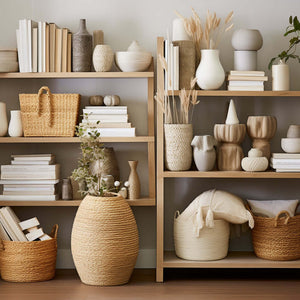
- Natural baskets and shelving — woven storage and irregular-edge wood shelves that hold ceramics and warm up minimal walls.
Shop the Look: Natural Materials
Hand-picked from the Inner Union collection.


5. Furniture and Seating
- Sushi bar — the central feature: an interactive counter that showcases the artistry of preparation.
- Tables — traditional low tables or contemporary designs that match the concept.
- Seating — a mix of comfortable chairs, counter stools, and floor cushions for tatami-style zones.
The sushi bar deserves the most attention of all. It is theatre as much as function — the place where guests watch raw ingredients become finished plates, and where the chef's hands are on display. Build it from a single beautiful slab of wood, light it well, and give counter guests room to lean in. Soft floor seating, meanwhile, is an easy way to add a traditional, grounded corner to an otherwise modern room — and it photographs beautifully, which matters more than it used to.
6. Decor and Accents
Decor is where restraint pays off most. A few well-chosen objects say more than a wall of them, and in a Japanese-leaning room the empty space around an object is part of the composition. Choose accents that could each stand alone, then use fewer of them than you think you need.
- Traditional art — hanging scrolls, woodblock prints, or a simple ikebana arrangement in the style of the Sogetsu school.
- Zen garden — a small sand-and-stone composition for a calming focal point.
- Ceramic objects — tea bowls, serving platters, and rustic cups displayed on open shelving double as decor and as pieces guests can actually use.
- Plants — bonsai, bamboo, or a single sculptural branch for a touch of nature.
Shop the Look: Decorative Ceramics
Hand-picked from the Inner Union collection.

7. Sustainability
- Eco-friendly materials — recycled and sustainable wood, bamboo, and natural fibers.
- Energy efficiency — LED and dimmable fixtures, efficient appliances.
- Waste reduction — durable, handmade tableware that lasts, plus thoughtful recycling and food-waste practices.
Sustainability and wabi-sabi share a philosophy: buy fewer, better things and let them wear in. Solid-wood shelving and woven baskets are as practical as they are quietly green. Remodelista has long championed this approach — the idea that the most considered interiors are also the most durable, because they are built from honest materials that improve with age rather than degrade with trend.
8. Branding and Identity
Consistency is what turns a nice room into a recognizable place. The most memorable restaurants carry a single identity from the logo and color scheme through the furniture, the lighting, the menu design, and right down to the cup a guest drinks tea from. When every detail agrees, the room feels intentional; when they argue, even an expensive space feels generic.
Aim for an identity that is both coherent and distinct — recognizably yours, and difficult to confuse with the sushi restaurant down the street. The goal of everything in this guide is a single one: a harmonious, memorable space that reflects the beauty and elegance of Japanese cuisine and culture, and that quietly persuades a first-time guest to come back. Get the bones right, let the materials age, and let the tableware carry the craft all the way to the hand.
Frequently Asked Questions
What is the best layout for a sushi restaurant?
The most effective sushi restaurant layout centres on the bar as the focal point, with seating arranged in a U or L around it so diners have a clear view of the chef. Allow 18–22 sq ft per cover for comfortable dining. Tatami or banquette zones add intimacy; keep service aisles at least 36 inches wide.
What Japanese restaurant design style is right for my concept?
The five proven directions are: Traditional Japanese (shoji, tatami, dark wood — best for formal or tourist-led dining), Modern Minimalist (concrete, clean lines, monochrome — best for design-led professionals), Fusion (mixed textures and bold accents — best for younger, experimental crowds), Wabi-Sabi (reclaimed wood, handmade pottery, earthy palette — best for mindful dining), and Japandi (light wood, Scandi-Japanese blend — best for design-conscious casual). Choose based on your audience and price point.
How should a sushi bar counter be designed?
Build it from a single beautiful slab of wood — pale elm, cherry, or dark walnut depending on your concept. Keep counter height at 42–46 inches for standing chefs. Install directional focus lighting directly over the counter to showcase the chef's hands. Leave 24–30 inches of depth so a full mise-en-place doesn't crowd the guest's sightline.
What materials are most used in Japanese restaurant interiors?
Natural wood (bamboo, cherry, cedar, elm), stone (slate, granite), paper lanterns and shoji screens, linen and cotton textiles, handmade ceramics, and woven natural baskets. These materials create the layered, calm warmth that defines a Japanese dining atmosphere without decoration that competes with the food.
What tableware should a sushi restaurant use?
Artisan Japanese ceramics — Mino ware, Arita ware, and handmade stoneware with irregular glazes — are the best choice. Match the style to your concept: hand-painted Imari porcelain for traditional rooms, matte speckled plates for minimalist spaces, wave-pattern bowls for fusion, rough wabi-sabi pottery for earthy rooms, and botanical-motif Japandi pieces for modern Japanese interiors.
Planning a Commercial Space or Sourcing Wholesale?
Inner Union Home partners with sushi restaurants, hospitality groups, architects, and interior designers globally. We offer exclusive wholesale pricing, customizable dimensions on solid wood furniture, and bespoke Japanese ceramics branding.
Click below to send us your project details and phone number, and our team will contact you back immediately.
Submit Sourcing Inquiry