Cart
0
This is the final chapter in our Interior Design Principles series. Before you dive in, catch up on our deep dives into balance and harmony, rhythm and repetition, proportion and scale, common design mistakes, the psychology of space, and the power of details.
You now speak the language of design. In our series you learned Balance, Rhythm, Proportion, Emphasis, Harmony. You know what they mean. You know why they matter.
But here's the thing, the rules look different in every room.
Picture balance in a white loft. Now picture it in a rustic pattern decorated living room. Same rule, two different worlds.
The same foundations apply whether you're working on a victorian mansion or a modern condo. Different styles, same foundations.
Today we're bringing it all together. We'll compare two opposite styles and we'll look at how pros will work the homes. And we'll take a look at how different movements shaped the rooms we live in now.
Part 1: Two Styles, Same Rules
Let's start with two styles that seem like opposites: minimalism and bohemian.
One loves empty space. The other loves full shelves. Yet both rely on the exact same principles. They just express them in different ways.
Minimalist: Less Gives More
Minimalism started in the 1960s as an art movement. Artists stripped away decoration and focused on pure shape. That same idea took over home design.
Minimalism prizes simplicity. Clean lines. Only the essentials. If an item doesn't serve a purpose, it doesn't belong.
How Minimalism Uses Each Principle:
Balance: Minimalist rooms love symmetry. Two matching nightstands flank a centered bed. A single pendant hangs over a dining table. The empty space in the room also counts. It carries visual weight, just like furniture.
Emphasis: With so few items, every piece stands out. One sculptural lamp grabs attention because nothing competes with it. Minimalism turns each object into a star.
Rhythm: Instead of repeating colors or patterns, minimalism repeats geometry. Horizontal lines in the furniture. Vertical lines in the windows. Rectangular rugs. This geometric echo creates movement.
Harmony: A tight color palette ties everything together. Whites, grays, beiges, and blacks. When every piece shares the same tones, the room feels unified.
What You'll See:
- Open floors with room to breathe
- Neutral colors on walls and furniture
- Simple shapes with no fancy trim
- Hidden storage to keep surfaces clear
- Natural materials like wood, stone, and linen
Bohemian: Collected and Layered
Bohemian style grew from 19th-century Paris. Artists who rejected convention filled their homes with travel finds, handmade crafts, and bold patterns. The ethos: there are no rules.
But that's not quite true. Boho rooms only look random. A closer look reveals the same design principles at work.
How Bohemian Uses Each Principle:
Balance: Boho prefers asymmetry. A tall plant on the left balances a low bookshelf on the right. A heavy woven wall hanging offsets a cluster of small frames. Different objects, but equal visual weight.
Emphasis: Bold patterns and saturated colors create focal points. A patterned rug anchors the room. A gallery wall of eclectic art draws the eye. Layered textiles on the sofa demand attention.
Rhythm: Boho repeats colors, textures, and motifs. The same rust tone appears in a pillow, a throw blanket, and a piece of pottery. Woven textures show up in baskets, rugs, and wall hangings. This repetition connects the eclectic pieces.
Harmony: Despite the mix, successful boho rooms stick to a color story. They layer many patterns, but those patterns share three to five key colors. The repeated palette creates unity.
What You'll See:
- Layered rugs, throws, and pillows
- Mixed patterns (florals next to geometrics next to tribal prints)
- Rich, earthy tones with jewel-tone pops
- Rattan, bamboo, and woven fibers
- Plants in every corner
- Collections of personal treasures, books, and art
- Handcrafted or vintage pieces with stories behind them
You Can Blend Them
More designers now mix minimalist calm with bohemian warmth. This hybrid—sometimes called "boho minimalism"—pairs clean backdrops with textured accents.
Start with a minimalist base. White walls. Simple furniture. Then add bohemian coziness through texture. A jute rug. A rattan chair. Linen curtains.
Keep surfaces mostly clear, but add one or two meaningful objects. Let plants be your color pop instead of decorative clutter.
The result: warmth without chaos.
Part 2: The Pro's Toolkit
What do professional designers actually do? They follow a repeatable process with defined steps. Here's how they turn principles into finished rooms.
Step 1: Research and Concept
Pros don't shop first. They research. They ask: How does the client live? What do they need? What do they love? They study the space. Light. Measurements. Traffic flow. They gather inspiration from many sources. Then they define a clear design direction before buying a single throw pillow.
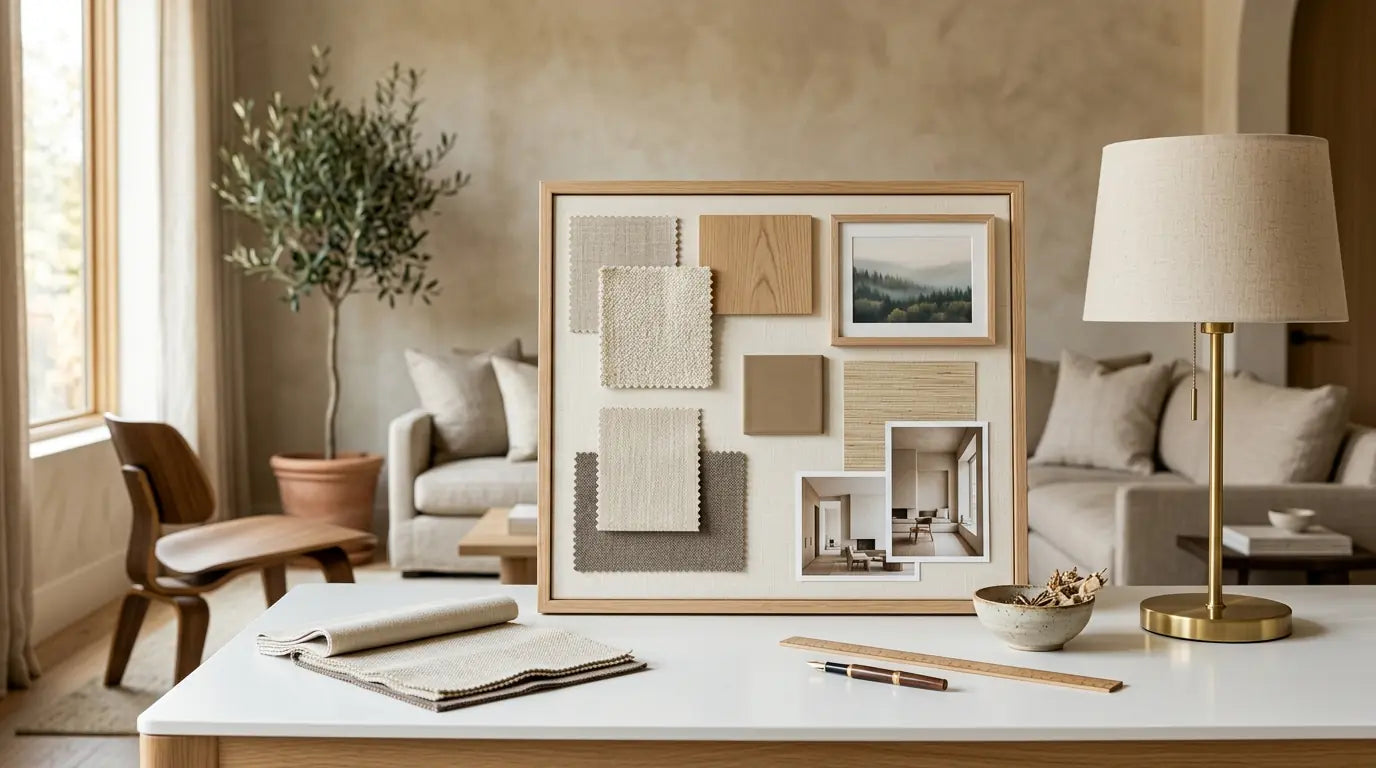
Step 2: Mood Boards
A mood board collects images, colors, materials, and textures in one visual. It defines the emotional direction of the project.
Step 3: Floor Plans
This step tests proportion, scale, and balance in the real footprint. A scaled floor plan helps you map traffic paths, check furniture sizes before buying, spot awkward proportions, and place related zones near each other.
Step 4: 3D Visualization
Software like SketchUp, Planner 5D, and others lets designers build virtual rooms. This catches scale mistakes before they cost money.
Part 3: A Brief History of Interior Design
Balance, rhythm, proportion—these principles evolved over more than a century of design movements.
The 1920s–1930s: Art Deco Glamour
Art Deco ruled the roaring twenties and thirties. Think geometric patterns. Bold symmetry. Luxurious materials like chrome, lacquer, and mirrors.
The 1919–1933: Bauhaus and "Form Follows Function"
The Bauhaus school in Germany promoted function over decoration. Simple geometric forms. Industrial materials. No ornament.
The 1940s–1960s: Mid-Century Modern
After World War II, mid-century modern became America's style. Clean, simple lines. Open floor plans. Large windows. Organic curves mixed with geometric shapes.
Bringing It All Together
Design principles are constants. Style is a variable.
Balance creates calm in a sparse loft and creates energy in a pattern-filled den. Proportion rules apply whether you love traditional or modern. Emphasis techniques work in Art Deco drama and Bauhaus simplicity.
Thank you for following this series. You now have the knowledge to design with intention. Start with one room. Apply one principle. Build from there.
And remember: The best-designed room is one that makes you feel good. That's the only rule that matters.