Carrito
0
Por qué las habitaciones neutras se sienten inacabadas y cómo arreglarlas
Una habitación neutra puede ser hermosa sobre el papel. Paredes de yeso suave, roble pálido, tapicería de lino, texturas tejidas, cerámica natural. Todos los ingredientes suenan bien. Y, sin embargo, muchos espacios neutros siguen sintiéndose ligeramente inconclusos cuando estás dentro de ellos. Son tranquilos, pero no convincentes. Bonitos, pero no completamente compuestos.
Este es uno de los problemas de decoración más comunes porque la gente a menudo asume que una paleta suave creará armonía automáticamente. En realidad, las habitaciones neutras aún necesitan estructura, ritmo y contraste. Sin esas cosas, la paleta comienza a difuminarse en sí misma. La habitación pierde definición. Nada se siente mal exactamente, pero tampoco nada se siente completamente resuelto.
La buena noticia es que las habitaciones neutras inacabadas generalmente no necesitan más decoración. Necesitan decisiones más claras. Una vez que entiendes lo que falta, la solución suele ser más silenciosa y sencilla de lo que la gente espera.
El verdadero problema no es la paleta de colores
Cuando una habitación neutra se siente plana, la gente suele culpar al beige, al crema o al blanco. Pero el problema rara vez es la paleta en sí misma. El problema es que las habitaciones neutras dependen más de formas de contraste más sutiles. Si todo es suave, mate, pálido y visualmente igual, el ojo no tiene dónde descansar ni nada en torno a lo cual organizarse.
Es por esto que algunas habitaciones neutras se sienten elevadas mientras que otras se sienten vagas. Las exitosas todavía crean jerarquía. Todavía le dicen al ojo qué es lo que importa primero, segundo y tercero. Todavía usan la proporción, el espaciado, el tono y las diferencias de materiales para crear forma.
Primera señal: Todo se encuentra en el mismo registro tonal

Una de las formas más rápidas en que una habitación neutra comienza a sentirse inacabada es cuando cada pieza principal vive en la misma banda tonal. Paredes pálidas, sofá pálido, alfombra pálida, cortinas pálidas, madera pálida. Nada interrumpe la suavidad lo suficiente como para darle a la habitación alguna estructura.
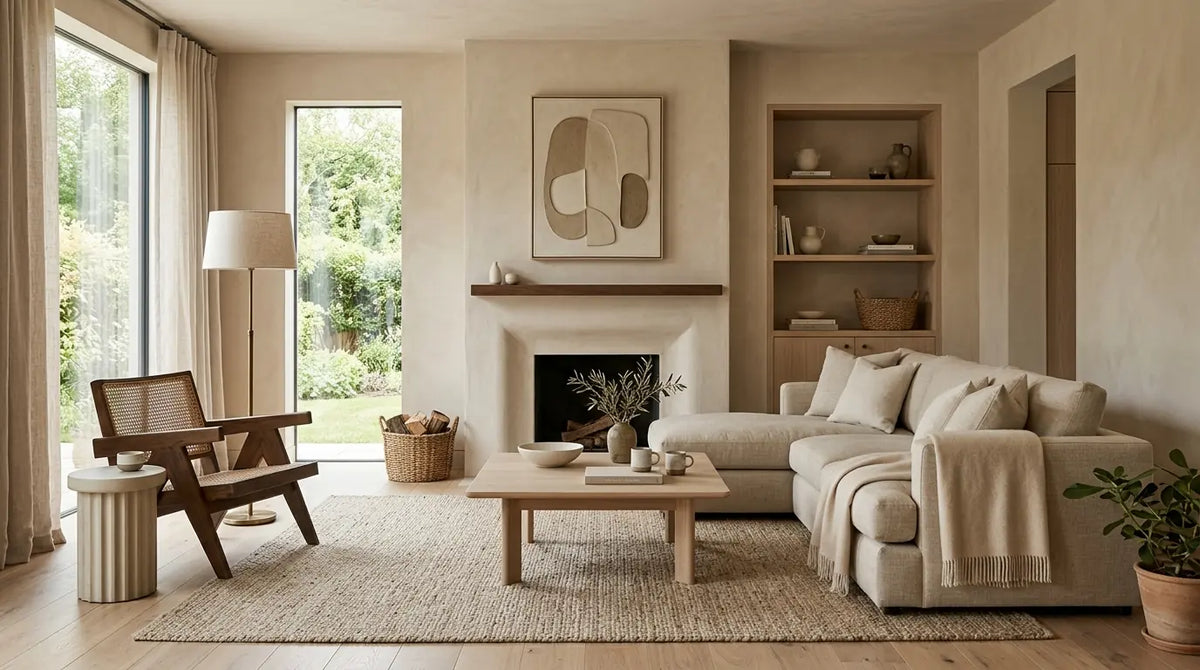
Esto no significa que necesites un acento negro fuerte o una pieza llamativa dramática. Significa que la habitación probablemente necesita una nota con un poco más de peso. Eso podría ser una mesa auxiliar de madera más oscura, una base de lámpara de bronce, un recipiente de cerámica ahumada o un marco marrón cálido. Una nota más profunda puede hacer que las capas más claras se sientan más intencionales porque les da algo con lo que relacionarse.
Aquí es exactamente donde la regla de un elemento oscuro se vuelve útil. No se trata de añadir drama. Se trata de añadir gravedad.
Segunda señal: La habitación tiene suavidad pero no tiene ritmo

Una habitación puede tener objetos individuales encantadores y aun así sentirse inacabada si nada resuena visualmente en el espacio. El ritmo es lo que hace que una habitación se sienta recopilada en lugar de accidental. En una habitación neutra, el ritmo a menudo proviene de materiales repetidos, formas repetidas o notas tonales repetidas.
Por ejemplo, si el lino solo aparece una vez, el roble solo aparece una vez y la cerámica solo aparece una vez, la habitación puede sentirse más como un conjunto de decisiones separadas que como un todo coherente. La repetición ayuda a crear calma porque reduce la aleatoriedad visual. Le dice al ojo que la habitación tiene una lógica interna.
Si esta es la pieza que falta, vuelve a El reinicio de un material. Repetir un material tres veces suele ser suficiente para que una habitación pase de estar dispersa a estar compuesta.
Tercera señal: No hay suficiente contraste en la textura

Muchas habitaciones neutras fallan no porque sean demasiado tranquilas, sino porque son visualmente demasiado suaves. Si el sofá, las paredes, la alfombra, las cortinas y los accesorios reflejan la luz de una manera similar, la habitación puede comenzar a sentirse monótona incluso cuando los colores son técnicamente diferentes.
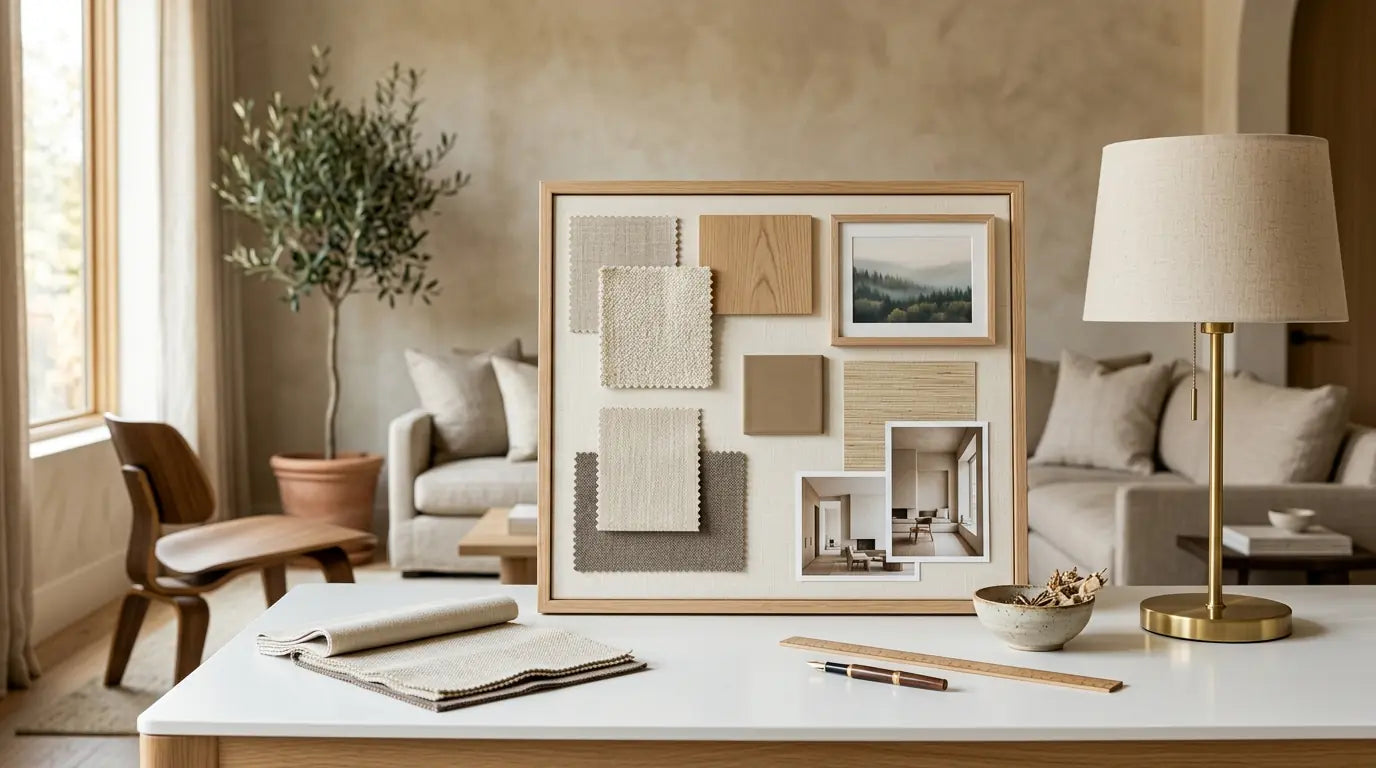
La textura es lo que mantiene viva una paleta contenida. Una pared de yeso mate al lado de lino lavado, fibra tejida, grano de madera oscura y cerámica hecha a mano crea una variación silenciosa sin necesidad de más color. El ojo lee las diferencias de materiales incluso cuando la paleta permanece en calma.
Esta es también la razón por la que las habitaciones con solo piezas tapizadas suaves a veces se sienten inacabadas. Necesitan una interrupción táctil. Una nota tejida. Una cerámica más rugosa. Un objeto con una definición de material más nítida. Ese contraste le da contexto a la suavidad.
Si necesitas un marco simple para esto, El método de la escala de texturas es el lugar más limpio para empezar.
Cuarta señal: La habitación está llena, pero sigue sin tener un enfoque

Otra razón por la que las habitaciones neutras se sienten inacabadas es que tienen decoración pero no tienen un ancla. La habitación contiene objetos, pero nada reúne silenciosamente la composición. Sin un punto focal, el ojo se mueve por el espacio sin aterrizar en ningún lado. El resultado se siente vago en lugar de sereno.
Un punto focal en una habitación neutra no necesita ser ruidoso. Puede ser una obra de arte con profundidad tonal, una lámpara escultórica, una consola que ancle el espacio, una pared de chimenea o incluso una ventana bellamente enmarcada si la habitación permite apoyarla. El punto es simplemente crear un lugar donde la habitación se sienta más resuelta.
Cuando el punto focal es claro, todo lo demás puede volverse más silencioso. Eso es a menudo lo que hace que la habitación se sienta terminada. No más decoración, sino más claridad.
Quinta señal: No hay espacio negativo

La gente suele asumir que el espacio vacío significa que falta algo. En realidad, el espacio negativo es lo que permite que una habitación contenida se sienta costosa e intencional. Sin él, incluso los objetos hermosos comienzan a aplanarse entre sí. Cada superficie se vuelve igual de activa. Cada rincón pide atención.
En los interiores neutros, el espacio negativo es especialmente importante porque hay menos contraste de color para separar las cosas claramente. El espacio mismo tiene que hacer parte del trabajo. Una mesa con solo un objeto considerado a menudo se siente más resuelta que una mesa con seis bonitos. Una pared con un solo marco fuerte a menudo se siente más tranquila que una pared con muchos gestos más pequeños.
Es por esto que el espacio negativo importa tanto en los interiores editoriales. No es vacío. Es estructura.
Cómo arreglar una habitación neutra inacabada
Empieza editando, no añadiendo. Elimina los accesorios que simplemente están llenando espacio. Luego hazte cinco preguntas.
- ¿Hay un elemento con suficiente peso tonal para anclar la habitación?
- ¿Al menos un material se repite lo suficientemente claro como para crear ritmo?
- ¿Las texturas varían de una manera que el ojo pueda sentir?
- ¿Hay un punto focal que organice silenciosamente el espacio?
- ¿Hay suficiente espacio para respirar para que los elementos más fuertes importen?
Por lo general, falta una o dos de estas cosas. Y una vez que se corrigen, la habitación cambia rápidamente. La paleta puede permanecer suave. La habitación puede permanecer tranquila. Pero ya no se siente inacabada.
El objetivo no es más, es estar más resuelto
Las habitaciones neutras más elegantes no son exitosas porque sean pálidas. Son exitosas porque son disciplinadas. Usan la suavidad con intención. Entienden dónde añadir peso, dónde repetir, dónde editar y dónde dejar que el espacio haga el trabajo.
Esa es la verdadera solución. No abandonar los neutros. No buscar colores más fuertes solo por contraste. Simplemente darle a la habitación suficiente estructura para que la paleta tranquila tenga algo a lo que aferrarse.
Una vez que eso sucede, la habitación deja de sentirse simplemente agradable. Comienza a sentirse terminada.
Para otra lectura complementaria útil, consulta La regla de las dos alturas. Las superficies a menudo revelan el mismo problema en miniatura: demasiada suavidad, no hay suficiente definición.