Carrito
0

Cómo crear capas en una habitación sin que se sienta recargada


Comprar jarrones de cerámica con esmalte abstracto: cerámica decorativa hecha a mano para el hogar
Comprar lámpara de mesa de papel japonesa | Lámpara de noche de mediados de siglo
Cómo crear capas en una habitación sin que se sienta recargada
El uso de capas es una de las ideas más repetidas en el diseño de interiores, pero también una de las más fáciles de malinterpretar. La gente oye "habitación con capas" e imagina añadir más cojines, más objetos, más cestas, más arte, más velas, más piezas en cada superficie. Entonces la habitación se llena más, pero no necesariamente queda mejor. Puede tener más decoración, pero no tiene más claridad. Una habitación verdaderamente estratificada no se siente recargada porque cada capa tiene una función. Cuando esas capas se eligen en el orden correcto, la habitación se siente más rica sin volverse abrumadora.

Comprar lámpara de pie moderna de columna de 72" - Pantalla de papel beige y base marrón
Comprar alfombra de lana trenzada
La primera regla: prioriza la función sobre la decoración
El error más común al crear capas es empezar por los accesorios. Los accesorios son fáciles de comprar, fáciles de mover y fáciles de justificar. Una bandeja, un jarrón, un cojín. Pero si a la habitación no se le ha dado una base clara primero, esas piezas a menudo se convierten en ruido visual. Antes de añadir decoración, pregúntate qué necesita la habitación funcionalmente. ¿Necesita suavidad? ¿Necesita luz? ¿Necesita un ancla visual más fuerte? Las capas funcionan mejor cuando la primera capa resuelve un problema real.

Comprar manta de algodón tejida en beige - Acogedora y elegante
Empieza con la base suave
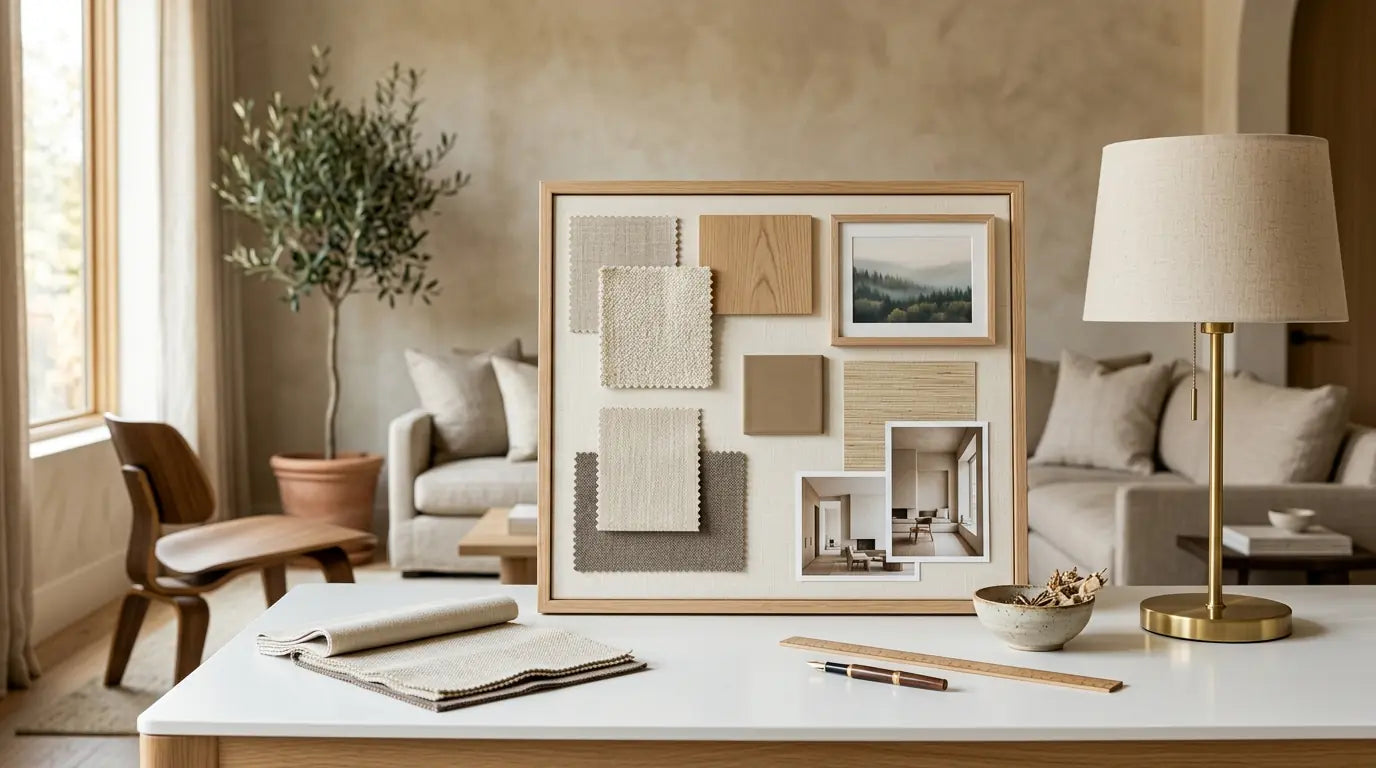
Toda habitación tranquila necesita una capa que reduzca la temperatura visual. Suele ser una capa textil: cortinas de lino, una alfombra de lana, ropa de cama de algodón lavado, un sillón tapizado suave o una manta. La base suave es lo que hace que la habitación se sienta habitable antes de estar decorada. Sin esta capa, la habitación puede sentirse rígida incluso cuando la paleta es cálida. Demasiada madera, piedra, metal, vidrio o cerámica sin suficiente suavidad textil puede hacer que un espacio se sienta visualmente correcto pero emocionalmente frío.

Comprar taburete de madera negro
Comprar jarrones de loza rústica estilo danés
Añade un punto de anclaje
Una vez que la habitación tiene suavidad, necesita peso. Una razón común por la que las habitaciones con capas se vuelven recargadas es que cada capa es pequeña, pálida y decorativa. La habitación se llena de objetos, pero nada tiene la suficiente gravedad para organizarlos. Un punto de anclaje puede cambiar eso. Puede ser una mesa de centro de madera más oscura, una base de lámpara de bronce, un marco de metal ennegrecido o un recipiente de cerámica ahumada. El objetivo no es que la habitación tenga un alto contraste, sino dar a las capas más suaves algo contra lo cual apoyarse.

Comprar jarrón marrón con pincelada
Comprar mesa de tronco de madera natural, mesa de centro rústica
Aporta una diferencia táctil
Después de la suavidad y el peso, la habitación necesita contraste de materiales. Si cada capa tiene la misma calidad de superficie, la habitación puede sentirse recargada y sosa al mismo tiempo. La textura es lo que permite que una paleta tranquila siga siendo interesante. Combina lo liso con lo irregular, lo suave con lo estructurado, lo mate con lo tejido. Combina lino con veta de madera, cerámica con lana o ratán con yeso. La diferencia debe interrumpir la monotonía, no crear caos.

Comprar lámpara de pie moderna de columna de 72" - Pantalla de papel beige y base marrón
Comprar taburete de madera maciza de olmo
Repite un material para que la habitación tenga ritmo
Las capas necesitan repetición o empiezan a sentirse aleatorias. Si cada objeto nuevo introduce un material, color, forma o acabado distinto, la habitación se vuelve difícil de leer. La solución no es combinar; es hacer eco. Repite un material en tres lugares tranquilos. Un marco de nogal, una mesa auxiliar de nogal y una bandeja de nogal. Una lámpara de papel, una pantalla de papel y una obra de arte clara. La repetición le da al ojo un camino y hace que la habitación se sienta intencional.

Comprar jarrón grande de arcilla hecho a mano
Comprar jarrón de cerámica pequeño | Jarrón decorativo nórdico
Deja una zona sin decorar
Una habitación no puede sentirse tranquila si cada superficie está haciendo algo. Uno de los movimientos de capas más importantes es elegir dónde no poner capas. Un parche desnudo de pared. Un lado más tranquilo de una consola. Una mesa de centro con un objeto fuerte en lugar de seis más pequeños. Un estante con espacio para respirar entre piezas. El espacio negativo no es vacío; es lo que permite que las capas elegidas se registren. Cuando cada rincón está lleno, nada parece importante.
La prueba de las capas
Antes de añadir algo nuevo, lee la habitación en este orden: Primero, ¿tiene una base suave? Segundo, ¿tiene un punto de anclaje? Tercero, ¿tiene contraste táctil? Cuarto, ¿se repite algún material? Quinto, ¿hay suficiente espacio vacío? Este orden importa porque evita que el proceso de crear capas se convierta en ir de compras. No te estás preguntando: "¿Qué más puedo comprar?". Te estás preguntando: "¿Qué tipo de capa falta?".

Comprar platos planos de cerámica esmaltada | Vajilla esmaltada al horno
Comprar jarrones de cerámica con esmalte abstracto: cerámica decorativa hecha a mano para el hogar
El objetivo es profundidad sin ruido
Una habitación con capas debe sentirse como si se hubiera construido con el tiempo, pero sin estar atestada por la indecisión. Debe tener suavidad sin volverse amorfa, peso sin volverse pesada, textura sin volverse desordenada y repetición sin volverse artificial. Ese equilibrio es lo que hace que una habitación se sienta rica y tranquila al mismo tiempo. Crear capas no es el arte de añadir más; es la disciplina de añadir el tipo correcto de diferencia en el lugar correcto.
Obtén la Guía de Capas gratuita
¿Quieres la versión de cuaderno de trabajo de este método? Descarga la guía con la lista de verificación de capas, preguntas de reflexión y páginas de planificación habitación por habitación.