Carrito
0

Cómo hacer que una habitación neutra se sienta terminada

Comprar lámpara de mesa de papel japonesa | Lámpara de noche de mediados de siglo
Comprar taburete de madera maciza de olmo
Cómo hacer que una habitación neutra se sienta terminada
Una habitación neutra puede verse hermosa en teoría y, aun así, sentirse ligeramente incompleta en la práctica. Las paredes son suaves. La tapicería es serena. La paleta es tranquila. No hay nada evidentemente incorrecto. Y, sin embargo, la habitación todavía se siente un poco vaga, un poco vacía o un poco demasiado educada como para ser memorable. Este es uno de los problemas más comunes en los interiores tranquilos, porque a menudo se asume que la suavidad creará armonía automáticamente. Pero una paleta contenida aún necesita estructura.
Una habitación no se siente terminada solo porque sea de tonos claros. Se siente terminada cuando el ojo entiende dónde posarse, qué elementos combinan y por qué el espacio mantiene su forma. Esa es la diferencia entre una habitación neutra que se siente lujosa y una que se siente simplemente segura. La buena noticia es que la solución normalmente no es añadir más color ni más decoración. Es lograr una mejor jerarquía, mejor repetición, mejor textura y una mejor edición.
El problema generalmente no es el beige, sino la falta de resolución.
Cuando las habitaciones neutras se sienten inacabadas, a menudo se culpa a la paleta de colores. Se piensa que la habitación necesita un contraste más fuerte, acentos más oscuros o una nueva pieza de diseño. A veces eso es cierto. Pero más a menudo, la habitación simplemente tiene demasiadas decisiones suaves que operan al mismo volumen visual. Una habitación neutra necesita definición de formas más sutiles. Necesita cierto peso tonal. Necesita ritmo. Necesita contraste de materiales. Necesita un punto focal más claro. Necesita espacio negativo para que las piezas más fuertes puedan destacar. Las capas, la repetición y el espacio negativo son formas de hacer que una habitación sobria sea legible. Una vez que esos elementos están en su lugar, la paleta puede mantenerse tranquila y la habitación puede sentirse completa.

Comprar jarrón largo de cerámica artesanal estilo horno japonés | Arreglo floral
Señal uno: Todo se encuentra en el mismo registro tonal
Una de las formas más rápidas en que una habitación neutra empieza a desvanecerse es cuando cada elemento principal reside en la misma banda de colores claros. Paredes pálidas. Cortinas pálidas. Sofá pálido. Alfombra pálida. Roble pálido. Accesorios pálidos. La habitación puede ser suave, pero no tiene gravedad. Nada ancla la composición. El ojo sigue moviéndose, pero no se detiene. Esto no significa que necesites un acento negro fuerte o un contraste dramático. Por lo general, significa que la habitación necesita una nota más profunda con suficiente peso visual para asentar las capas más ligeras a su alrededor. Esa nota podría ser una mesa de madera más oscura, una base de lámpara de bronce, un jarrón de cerámica ahumada o un marco de color marrón cálido. Una sola nota más profunda a menudo hace que el resto de la habitación luzca más intencionado, porque le da a los tonos más claros algo con lo que relacionarse.

Comprar estantes de pared de nogal con borde vivo - Decoración para sala de estar
Comprar pantalla de lámpara de papel en forma de semicírculo
Señal dos: La habitación tiene suavidad pero no tiene ritmo
Una habitación puede tener piezas hermosas y aun así sentirse incompleta si nada resuena sutilmente en el espacio. El ritmo es lo que convierte las decisiones individuales en una sola atmósfera. En los interiores neutros, el ritmo suele provenir de materiales, familias tonales o formas repetidas. El lino aparece más de una vez. El nogal aparece más de una vez. La cerámica aparece más de una vez. Una curva es respondida por otra curva en algún lugar de la habitación. Sin esa repetición, la habitación puede sentirse como una colección de cosas bonitas por separado en lugar de un pensamiento coherente. Es por eso que repetir un material auténtico tres veces a menudo cambia una habitación más rápido que comprar algo nuevo. La repetición le da al ojo un camino a seguir. Reduce la aleatoriedad visual. Ayuda a que la habitación se sienta creada con un propósito, en lugar de simplemente ensamblada.

Comprar cesto de ropa de ratán natural con forro de lino
Comprar juego de funda nórdica de lino francés a rayas - Ropa de cama de lujo
Señal tres: La paleta es tranquila pero los materiales son demasiado similares
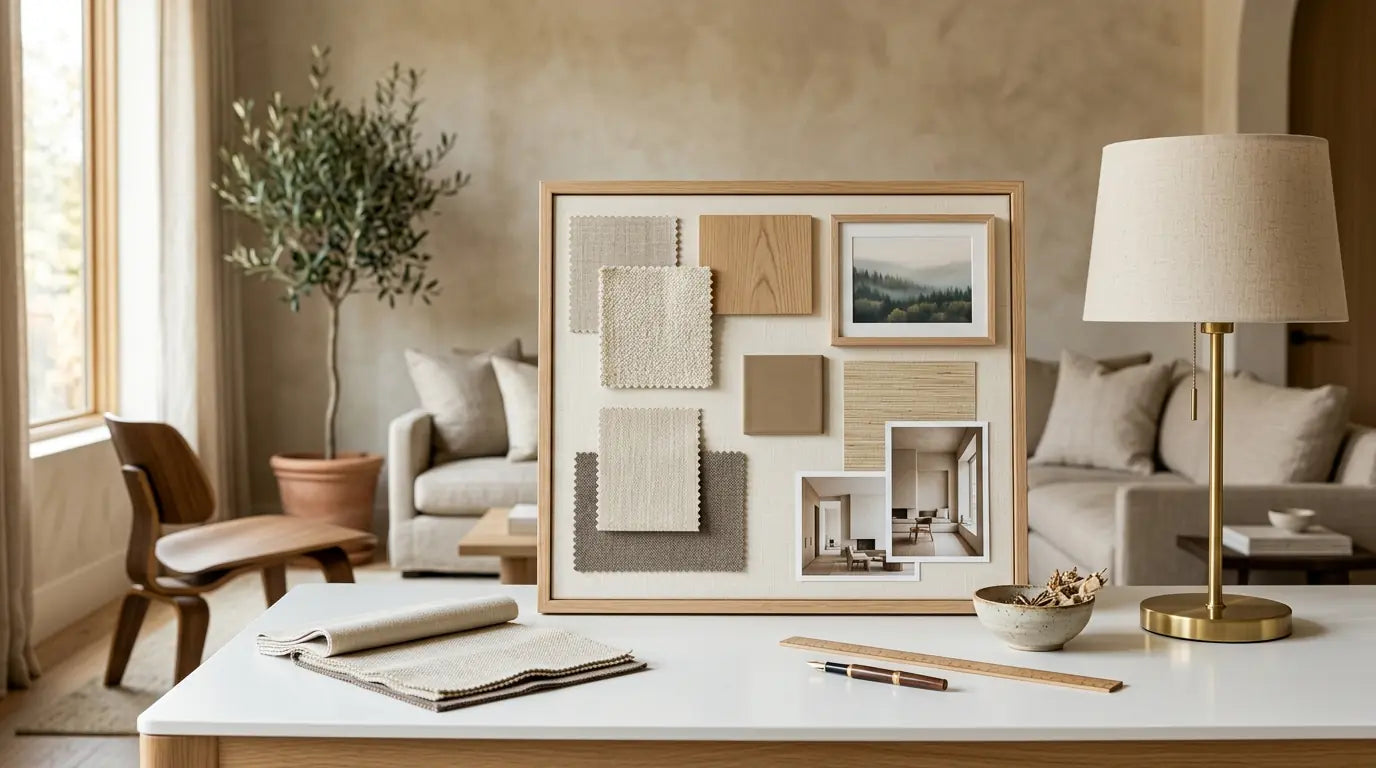
Muchas habitaciones neutras fallan no porque sean demasiado tranquilas, sino porque son demasiado uniformes. Si cada superficie refleja la luz de manera similar, la habitación puede aplanarse incluso cuando los colores cambian técnicamente de un elemento a otro. La tapicería, el yeso, la alfombra, las cortinas y los accesorios comienzan a mezclarse en una suavidad continua sin interrupción táctil. La textura es lo que evita que una paleta tranquila resulte monótona. Aquí es donde la habitación necesita una mejor combinación de superficies que el ojo pueda sentir: lino lavado junto a vetas de madera visibles, cerámica mate junto a fibra tejida, piedra lisa junto a una forma tapizada más suave. El contraste de materiales crea profundidad sin necesidad de que la paleta sea más intensa.

Comprar lámpara de mesa de papel japonesa | Lámpara de noche de mediados de siglo
Comprar mesa auxiliar de tronco de madera natural, mesa de centro rústica
Señal cuatro: Hay decoración pero no hay un enfoque claro
Otra razón por la que las habitaciones neutras se sienten inacabadas es que tienen objetos pero no un ancla. La habitación contiene una lámpara, una consola, un jarrón, una silla, tal vez un estante con piezas decorativas. Pero nada unifica la composición. Nada guía la mirada con calma. Cada elemento pide aproximadamente la misma cantidad de atención, lo que significa que nada se siente realmente importante. Un punto focal en una habitación sobria no necesita ser dramático. Solo necesita suficiente claridad para organizar el resto del espacio. Puede ser una obra de arte tonal, una consola robusta, una lámpara escultórica, una pared con chimenea, una cortina de líneas fuertes o incluso una pieza de mobiliario con proporciones hermosas si el resto de la habitación lo respalda adecuadamente.

Comprar jarrón impreso en 3D hecho de cerámica
Comprar cuenco central ovalado fino tallado a mano en tonos marrón rústico y natural
Señal cinco: Las superficies están decoradas, pero no resultan integradas
Las habitaciones suelen revelar su cualidad inacabada con mayor claridad en las superficies. Una mesa de centro, consola, estante o mesa de noche puede reforzar la lógica de la habitación o deshacerla discretamente. Demasiados objetos pequeños en acabados no relacionados hacen que la habitación se sienta indecisa. Demasiadas piezas a la misma altura la hacen sentir plana. Demasiado relleno la hace sentir abarrotada incluso cuando la paleta se mantiene suave. El estilo de las superficies importa porque las pequeñas viñetas refuerzan la lógica de la habitación o la dispersan. Por lo general, la solución no es añadir más piezas, sino editar con mayor determinación y dejar que uno o dos objetos sean los protagonistas. Un cuenco más fuerte. Una lámpara más alta. Una obra de arte enmarcada con espacio para respirar. Un recipiente de cerámica con suficiente vacío a su alrededor para cobrar importancia. El espacio negativo otorga a cada objeto elegido más autoridad.
Cómo hacer que la habitación se sienta terminada
Empieza por editar, no por añadir. Elimina los accesorios que solo están ocupando espacio. Luego, hazte un conjunto más pequeño de preguntas clave: ¿Existe algún elemento con suficiente peso tonal para anclar la habitación? ¿Un material está lo suficientemente repetido para crear ritmo? ¿Las texturas varían de una manera que el ojo pueda realmente percibir? ¿Hay un punto focal que organice la habitación discretamente? ¿Hay suficiente espacio negativo para que las piezas más fuertes destaquen? Por lo general, faltan uno o dos de estos elementos. Y una vez corregidos, la habitación cambia rápidamente. La paleta no necesita dejar de ser suave; solo necesita más lógica interna.

Comprar lámpara de mesa de papel japonesa | Lámpara de noche de mediados de siglo
Comprar taburete de madera maciza de olmo
El objetivo no es tener más, sino que esté mejor resuelto.
Las habitaciones neutras más elegantes no tienen éxito porque sean pálidas. Tienen éxito porque son disciplinadas. Entienden dónde añadir peso, dónde repetir, dónde crear textura, dónde dejar de decorar y dónde dejar el espacio en paz. Eso es lo que hace que una habitación neutra se sienta terminada. No un color más fuerte. No más objetos. Solo una jerarquía visual más clara dentro de la calma. Si una habitación ya se siente casi correcta, no te apresures a reemplazar toda la paleta. Primero, resuélvela.
¿Listo para transformar tu espacio?
Explora nuestra colección completa de decoración para el hogar y encuentra las piezas perfectas para tu tablero de inspiración.